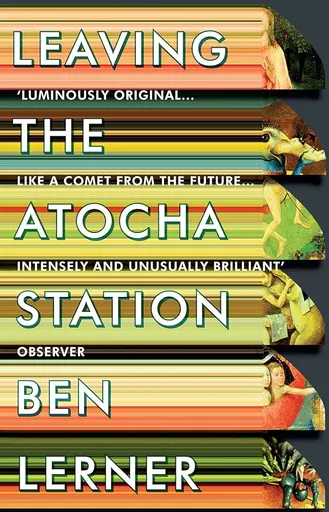

I stayed away from Ben Lerner for a long time because of all the connotations of the "autofiction" label. But I was really surprised. I think this is a really funny, pleasurable book; I think it does interesting, "new" things with narrative; and I think what it's doing doesn't really have much to do with whatever "autofiction" is supposed to mean.
On a plot level, the book covers a young American poet called Adam Gordon staying on a fellowship in Madrid around 2004. Gordon is a Ben Lerner alter-ego (Lerner also did a similar fellowship around this time), but what makes the autofiction label seem like a bad fit is that Adam is a conceited shithead whose minor frauds and confusions constantly embroil him in little adventures of miscommunication and ego-inflation/deflation. So he seems to resemble any number of amusingly irritating fictional protagonists in the line of David Foster Wallace or Woody Allen much more than being a mask for Lerner. And his stupid decisions mean that there is actually drama and narrative movement, even if it's not "plot" per se.

If "autofiction" does name something about this book, it might be its effort to move certain things we consider peripheral to life, because they're banal or "inessential," into the center of frame. One of these things is miscommunication: Adam's Spanish is bad, so he's basically constantly unsure if he's really understanding what people are saying to him or the impression he's giving off. Another aspect is strictly undramatic everyday activities (like Jeanne Dielman peeling potatoes); so Adam at one point reads some Tolstoy and wonders about how so much of his life is spent doing stuff like reading that has no "story" in it but is just as much "real" as anything else. And a third aspect of life Lerner catches is self-consciousness, the way we're always a little bit detached from direct experience or authenticity, a theme introduced at the start by his going to a museum and jealously watching a man who weeps at all the paintings.
This sounds really dry, but it's actually a lot of fun. At the level of action, it's enjoyable to follow Adam while he navigates his confusion and the constant push-pull of social intercourse with others, and it feels true to life as well. At the level of form, Lerner has a poet's love of pattern and motif that dwells both in the movement of the sentences and his elaboration of his themes into different situations or angles, like a section that's Adam's IM conversation with a friend in Mexico who's witnessed a tragedy.
There's also a tragedy in this book, a description of which gave me the title for review. The line struck me as a good synecdoche for Lerner's style. Weeping and screaming--real life! But then there's that distanced, too-formal "and/or"--language, self-consciousness. Is it meant to be a moral critique? I'm actually not sure. One thing I like about this book is that while an author like DFW views this gap between us and our experience as a tragedy or something to overcome, Lerner seems to ask us if we can learn to live in, enjoy, or dance in this space. It felt like a genuinely novel perspective to me, whether or not you agree with it.