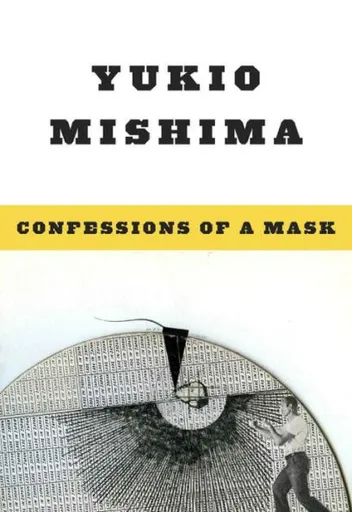
by Yukio Mishima, Meredith Weatherby
““My 'act' has ended by becoming an integral part of my nature, I told myself. It's no longer an act. My knowledge that I am masquerading as a normal person has even corroded whatever of normality I originally possessed, ending by making me tell myself over and over again that it too was nothing but a pretense at normality. To say it another way, I'm becoming the sort of person who can't believe in anything but the counterfeit.”
“My 'act' has ended by becoming an integral part of my nature, I told myself. It's no longer an act. My knowledge that I am masquerading as a normal person has even corroded whatever of normality I originally possessed, ending by making me tell myself over and over again that it too was nothing but a pretense at normality. To say it another way, I'm becoming the sort of person who can't believe in anything but the counterfeit.”
““When a boy of fourteen or fifteen discovers that he is more given into introspection and consciousness of self than other boys his age, he easily falls into the error of believing it is because he is more mature than they. This was certainly a mistake in my case. Rather, it was because the other boys had no such need of understanding themselves as I had: they could be their natural selves, whereas I was to play a part, a fact that would require considerable understanding and study. So it was not my maturity but my sense of uneasiness, my uncertainty that was forcing me to gain control over my consciousness. Because such consciousness was simply a steppingstone to aberration and my present thinking was nothing but uncertain and haphazard guesswork.”
“When a boy of fourteen or fifteen discovers that he is more given into introspection and consciousness of self than other boys his age, he easily falls into the error of believing it is because he is more mature than they. This was certainly a mistake in my case. Rather, it was because the other boys had no such need of understanding themselves as I had: they could be their natural selves, whereas I was to play a part, a fact that would require considerable understanding and study. So it was not my maturity but my sense of uneasiness, my uncertainty that was forcing me to gain control over my consciousness. Because such consciousness was simply a steppingstone to aberration and my present thinking was nothing but uncertain and haphazard guesswork.”
This reminded me of the much more recent novel by Sayaka Murata, Earthlings, a personal favorite and likewise pronouncedly Japanese novel on pining...