i can't remember how many summers ago it was that i read and wrote to an internet stranger on his wonderful--and thoroughly obscure--essay on monstrosity. in it, he considered (this is the vaguest of recollections) the question of how to create a monster; and observed that artistically, so many attempts to conjure the monstrous fall invariably into gimmickry. when one hears the word monster, one might think of the fanged and pasty-faced vampires of the successive cinematic draculas, the hulking figure of godzilla clomping down upon a miniature japan, if you take a classical bent the beastly minotaur and a modern one, sci-fi bent, the spiny extraterrestrials of the alien franchise. or, of course, the iconic monster of hollywood's frankenstein--the square headed, scarred borlis karloff, with bolts running through his neck. these images have long since descended into the caricatures (and in some cases, camp), if they ever contained about them the truly monstrous. the latter case, in particular, seems to have very little to do with mary shelley's 1818 text, which responds to the question how to create a monster? by holding up a mirror. a mirror, darkly--the monster in flashes and shadows, at the edges and through the crackes--a trick of the light, we may sometimes convince ourselves, for everything will be revealed in the end--but a monster nonetheless, and we know this because of our unease and our agony, our mortification and our horror, and our inability to look away from what is most clearly ourselves.
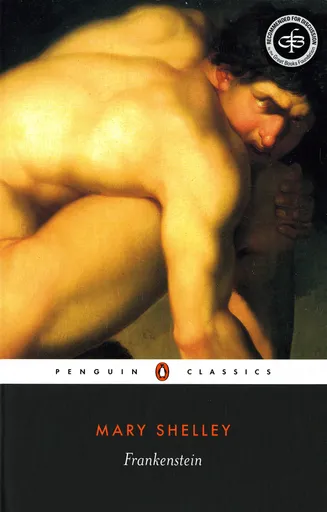
to say that to be human is to be monstrous is an assertion to which history and life has provided ample evidence; it is an assertion which at this point (perhaps, at all points) appears to border on tautology. if this was the assertion of frankenstein, perhaps we would turn away, bored by the remembrance of our tedious high-school literature classes (no, the monster isn't frankenstein, frankenstein is the monster, etc, etc). but shelley's mirror is not that kind of funhouse, she expands rather than reduces: in frankenstein the worst of human nature is on display--our egotism, our prejudice, our vainglory, our bloodlust and impulse for conquest and hierarchy--but so is the best. that is, our love, our capacity for self-sacrifice, our curiosity and tenacity and grief, our ability to appreciate and create beauty, how bravely we cling to life in the face of incalculable loss. the depth and the chiaroscuro of shelley's portrait makes it impossible not end up asking of oneself the greatest, most perpetual questions of human nature: why is it that our fear is as great as our courage? that our hatred is as blind as our love? why is our generosity--which can so clearly be seen to exist, in mundane and magnificent forms all across the earth--so selective, so narrow, so paradoxically miserly? why this smallness amidst this vastness? why are we what we are, and must we always be this way?
there are many answers we could come up with--theories that depend on historical materialism or evolutionary biology or Christian cosmogony, but ultimately that is all we are left with--theories. the essence of who we are as a species, of why we came to be and what we might become--is ever unfolding and thus ever unknown, and it is from this void, this blank slate, this eternal crossroads, that shelley illuminates and disturbs, that she draws her monster.
another thing so striking to me about frankenstein is its refusal to be any one novel at once; it is like an alexandrite stone, it diffuses different colors held up in different lights. there is a reading of frankenstein that is feminist, that is marxist, that is anti-imperialist, that is christian and that is pagan; literarily, it is categorized as gothic--but at times takes on shades of transcendentalism and the romanticism of her husband, it is epistle and soliloquy, (the earliest?) science fiction and philosophy. there are a thousand allegories to be divined out of this text, signs and symbols which come loose from the silt like panned gold. this, of course, seems to be what has allowed it endure: that every successive generation of readers can discover it again.
unlike some writers a la dostoevsky who try to contend with the great human questions and end up devolving into naked treatise, with characters as servile mouthpieces, shelley is a much more crafty--and therefore entertaining--writer. (and concise!) frankenstein as a work of fiction surpassed my expectations in just how utterly entertaining it was--that its great questions and artistic ambitions are allowed to surface naturally as we run headlong through french palace intrigues and childhood loves, mad sled-dog chases and knotty bavarian professors. i was unable to stop reading once i had started.
considering this is a staple of english curriculum here, i find it a mild kind of miracle that i went a quarter century without reading so much of a word of this book. i am incredibly grateful that i came to it in my own time; in a classroom, i fear this book have been laboriously dissected to death (& never galvanized back to life)! being allowed to read shelley's masterpiece unreservedly, to walk into the proverbial two hundred year old theater blind, was a privilege and an immense delight. i was spellbound.