
Gravity's Rainbow
Write Review
Gravity's Rainbow
Write Review

a singular experience

User avatar fallback
May 06, 2026

this is my first time really tackling one of these long, sprawling, post modern tomes (other than my failed attempt at reading infinite jest -- i clocked out at the 8 page filmography footnote, sorry IJ bros) and man, what a trip! needless to say, ive never read anything quite like gravity's rainbow; this novel is a towering achievement and has definitely landed a spot among my favorites, even despite the occasional frustration i had reading it.

Story pin image

im not sure where to start with a book like this. what perhaps surprised me the most about the novel was its sense of humor. i guess this book's sheer funniness and its constant teetering on looney tunes logic gets lost in all the talk about it being like, the hardest book you'll ever read -- and while that certainly is true, dont get me wrong, i wish more spotlight was cast on just how fun the book is once you get into its rhythm. i mean this thing has pie throwing slapstick in a hot air balloon, a guy getting sucked into a toilet, a pavlovian scientist getting his foot stuck in a toilet, a toilet with an electric frog that'll shock you if you piss on it, a toilet ship (lots of toilets), i mean i could go on! i feel like this book belongs with moby dick in the category of books who's reputation online often totally misrepresent just how humorous and enjoyable it can be, even at its most tangential.

of course, its not all fart and dick jokes, as the book is dealing with a plethora of incredibly high brow concepts that are as impressive in depth as they are in scope. what i was most intrigued by was how profoundly anti capitalist this text is -- there's the obvious links to the military industrial complex and the war being a "celebration of markets" but it also diverges into more abstract concepts, such as the ever looming presence of death encouraging people to play more into the capitalist system, buying what they can and pursuing materialistic pleasures in order to distract themselves from the ever present pull of gravity. the elites, or "They", use death to their advantage -- since there is no cycle of recurrence or rebirth, then there's no harm in selfishly taking and extracting from and exploiting everything in your path until zero is reached, right? that's why the immortal lightbulb, byron, threatens phoebus' order so much -- if a cog can escape its planned obsolescence, it suddenly lands in a place that is both directly outside threatening to the system, and They certainly cant have that.

This may contain: a black and white drawing of a man wearing a party hat


speaking of capitalism, there's an awesome section where pynchon dives into the near complete eradication of the herrero people and muses on the nature of colonialism. he sees it not as being rooted solely in greed and the service of the dollar, but as an opportunity for colonizers to get away with morally bankrupt behavior they otherwise couldnt in their supposedly "clean", shining white home country. africa serves as the "outhouse for the european soul", a land where colonizers can indulge in their own depravity and get away with it. so even when tackling matters related to capitalism and colonialism, pynchon makes it far from one note and offers a very multifaceted take.

i also loved the inclusion of spirituality and the tarot; im not sure how sincere pynchon is with his engagement and portrayal of spirituality in his texts, but i like how the characters in this novel approach spirituality as a means of escaping the life death cycle, the spiritual realm being the unseen other side beyond the zero of the rocket's parabola. a lot of the tarot stuff near the end seemed to be blicero just jerking himself off and constructing some sort of symbolism to decorate and disguise his really abhorrent psycho sexual obsession with death, but it was still a blast to read.

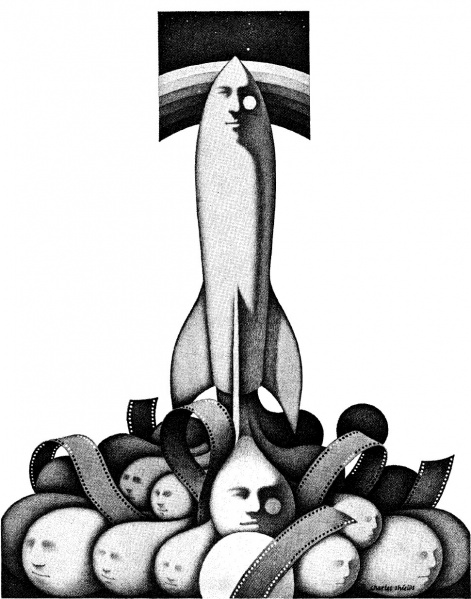
File:Poirier-Review-GR-Illustration.jpg


the motif of theatre was also really intriguing -- mainly politics as theatre, probably most succinctly put in the segment featuring a satirized richard nixon at the novel's end. it puts the beginning of the novel in a whole new light, and while the idea of politics being theatrical or politicians being fake or shallow isnt entirely new, pynchon manages to tackle it in a very nuanced and intelligent way.

there were parts of this where i was just completely lost, inevitably -- theres so much lolly gagging and dilly dallying in part 3 that it was easy to lose the thread of exactly what slothrop was doing or why we were here, but i presume thats part of the point. parts 1 and 4 had sections where i just had to accept that i didnt know what was going on and had to submit to the story's strange dream logic. thats part of the joy of this book and im sure more sections will illuminate to me on a re read. as a whole the novel works beautifully, and even at its most frustrating the book is undoubtedly a singular, jaw dropping work -- certainly worth the time and effort if this sort of thing intrigues you. big thumbs up from me!

Story pin image

PA+8
0 comments
User avatar fallback

No comments yet. Be the first to share your thoughts.