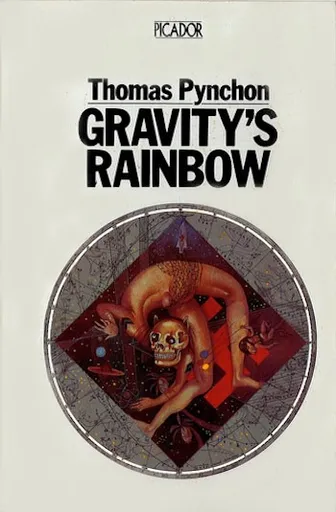

Pynchon is clearly a good writer, there are pieces of his writing that are probably some of the best I've read, if not the best. The Poekler chapter is one of the most poignant things I've read. The banana breakfast scene is such a delight!
Buttt, and this is a huge post-capitalistic-obesity-sized but, theres so much nonsense writing to get through to get there. The pay off is just not worth it. I feel like atleast 30% of the book should have been edited out. The book started off great and just completely fell off the wagon in the second half. This was written at a time when probably everybody was doing coke - the writer, the editor, the publisher and it shows.


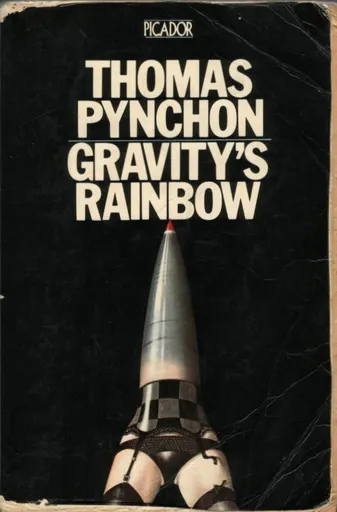


I feel certain that in my attempts to defend this book I'm going to do everyone that likes it a disservice and probably make it seem even less appealing than it already is to you and any other skeptics now. So take that with a grain of salt and know that it means I like the book enough to hop into online discourse about it anyway. And that your thoughts on the book are considerate enough that it's worth discussing. I think a lot of what you're noticing is totally valid. This will probably sound like a catch-all defense but I also think a lot of it is intentional. Things start out pretty tame and then accelerate wildly in the second half of the book. Any semblance of Slothrop's mission seems to erode as he himself evaporates into the narrative and the impossibly complex conspiracies and ideologies within it. Important details are forgotten that felt pivotal to the plot when they were first touched on. The epigraph of the final part of the book is literally "What?" attributed to Richard M. Nixon. Chaos reigns by the end of the book in a way that feels pretty insufferable and disappointing on its face. You called out in another comment that you did CoL49 before GR and I think that's a good continuum, especially bringing in Foucault's Pendulum. Both Eco and Pynchon are interested in demonstrating the impossibility of teasing apart meaning from the slop of conspiracies that have been created in the world. Eco traces out history from the medieval period to the modern day through the lens of secret societies and the obsession they spark among occultists and people trying to find meaning in occult texts and conspiracies. Pynchon does the same in GR starting at WWII and using the lens of Nazi occultism and technocratic military industrial complex cabals. He's interested in the obscene state of covert insanity that's arisen by the time of the books writing in the 70's. At that point any attempts at counter culture had either been outright killed or fried into static the dissonance built by CIA spooks and bureaucrats. In the same way that CoL49 fizzles into entropy-fueled white noise, GR culminates in the shape of a rocket shot from 1940's Germany slowly reaching its apex and then accelerating straight into the modern world where it's being read. All the while controlled with a slew of odd cybernetic Freudian techniques by a handful of people who probably don't understand their own ultimate goals. None of this is to say that this is stuff you missed or that your concerns aren't valid. There is a lot of fluff in the book and I guess I'm a sucker for Pynchon's sort of "mathematician writes a Looney Tunes episode" style of slapstick action. But definitely worth bringing up that some of it seems to me to be intentional and to consider why Pynchon structures things in the way he does. I believe he shapes his novels after pretty specific visual motifs or thought experiments. CoL49 looks like Maxwell's Demon and entropy, while GR looks like the parabola of a rocket. But ultimately if that doesn't do it for you no harm done and it comes with the territory of liking a novel that's express goal is to go insane and break apart by the end of it. Side note: I was gonna link a great Hedgehog Review essay about Pynchon here to round things out but apparently all of their stuff is paywalled now. Sad. Pertinent for the themes here. But sad.
Always appreaciate talking to an ardent book stan :) > it comes with the territory of liking a novel that's express goal is to go insane and break apart by the end of it. Ah, man. Thats lovely. Wish I loved it like this. Maybe im not a mature enough reader to appreaciate the structural beauty of the book. I pay mild attention to the structure obviously but its definitely not on the top of my priorities when im reading. Are you talking about this article? https://web.archive.org/web/20230728231542/https://hedgehogreview.com/issues/theological-variations/articles/the-far-invisible Looks interesting. Ill read it over the weekend
Yep that’s the exact one. Your skills with the wayback machine are clearly better than mine.