
Is the modern, secular world denuded of joy, terror, and mystery?
Is our culture becoming too soft and "feminized"?
Are we so over-socialized, self-conscious, and neurotic that all experience lacks spontaneity and life feels like a hollow performance rather than a sacred gift?
Is the solution to these anxieties about the modern world vigorous physical labor outdoors? Or the terror and ecstasy of combat? Or making our societies more like those of medieval Europe? Or a return to traditional religion, particularly Roman Catholicism?
All of these questions and answers have been posed in the last few years. They've become particularly salient on the right, where the contradictions of Trumpism have allowed conservatism to mean everything from Nietzschean self-aggrandizement to TradCath submission. But even people on the left, at least those without a Bluesky account and an "In This House We Believe" sign, have sensed that all is not well with progress, secularization, and economic growth. Something is missing in the modern world.
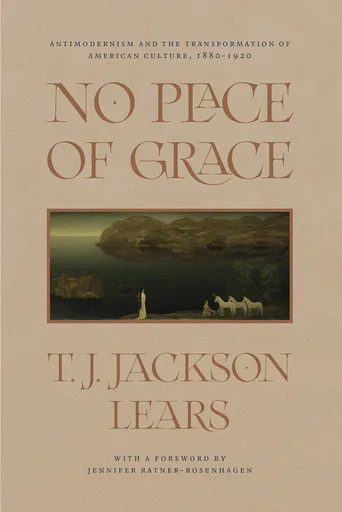
In No Place of Grace: Antimodernism and the Transformation of American Culture, 1880-1920, T. J. Jackson Lears argues that we've been here before. Well, he doesn't say we in 2026 have been here before. The book was published in 1981. But he does document several prominent critiques of modernity that emerged around the turn of the twentieth century that look startlingly similar to those being levied today.
The critics Lears profiles were ostensibly the greatest beneficiaries of modernity: blue-blooded aristocrats like Henry Adams (Adams as in John and John Quincy) and comfortable sons of middle class strivers like William Sturgis Bigelow, men (and a few women) whose material conditions should have enabled untrammeled opportunity. Nonetheless, antimodernists argued for recapturing something that was missing in the modern world.
This lack--or the excessive demands of bourgeois convention--led to elite anxiety and culminated in the spread of "neurasthenia," a sort of nervous exhaustion at the need to perform and achieve. Neurasthenia, coupled with the weightless unreality of bourgeois life, led elites to seek fulfillment further afield: in handicrafts, in the medieval past, in martial glory, or in the mysteries of the Orient.
Lears does not document these criticisms as a historical oddity--he emphatically denies that antimodernism was a "last gasp" of a fading, pseudo-aristocratic elite as it gave way to the industrial-managerial bourgeoisie. Instead, he argues that antimodernists paradoxically paved the way for the further advance of modernity. Particularly, he sees antimodernist resistance as therapeutic rather than moral, as emphasizing inner, personal experience rather than social change.
Thus, "Arts and Crafts" ideology and its emphasis on strenuous labor reinforced rather than challenged the belief that "the work people do for a living will be tedious or excessively demanding and will drive them to seek the satisfactions of firsthand experience off the job." Likewise, the martial ethic did not revive chivalry but paved the way for modern imperialism and industrial warfare. Dabblers in medieval Catholicism sought the ecstasy of the conversion experience rather than the real fear of literal Hell, which whipped man into shape even on Earth.
All of this led to the further legitimization of individual fulfillment as the main goal of life, an attitude perfectly suited to a growing consumer economy based on large bureaucratic corporations.
If you like Christopher Lasch, you'll like Lears. Both have an ability to adroitly blend history, psychology, and cultural theory while remaining readable for lay people. Personally, I found Lears more compelling, as he is more capable of staying in his lane of history and doesn't dabble in as much woo-woo Freudianism. He also supports his thesis with vignettes of "representative" figures from the period, adding biographical detail to his larger historical analysis.
This is a book that I am sure I will return to frequently, not only for its insight into the past but for its relevance to the present. The anti-modern impulse is still among us; our culture abounds with tension between the rational, bureaucratic, and controlled modern personality and explosive animal instincts lurking beneath the surface. The criticisms levied by anti-modernists are real, but Lears' assessment of their consequences should give pause to those of us who would uncritically resurrect them.