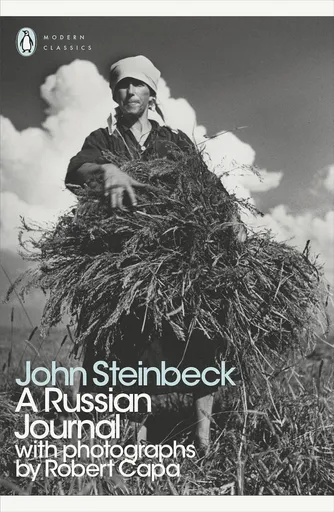

Literary legend John Steinbeck flies to Moscow in 1948 with his mate, the equally legendary Hungarian-American war photojournalist Robert Capa. Together, Steinbeck and Capa visit Moscow, Stalingrad, Kiev, and Georgia, with the intent to introduce American readers to the everyday lives of people in the USSR. Steinbeck aims to document only what he sees, without bias or propagandizing. Whether he achieves it on the page will probably depend on the reader.It's obviously far from his best work and my reading suffered from picking it up immeadiately after Svetlana Alexievitch's Secondhand Time - completely different time period and format of course but it was impossible not to find many of Steinbeck's sociopolitical observations shallow, superfluous, even naive by comparison?Disregarding potentially unfair comparisons, and expectations of something a little more rigorous, it was a nice read overall, colorful and weirdly funny given the context. Steinbeck is able to find humor in everything, somehow, without mocking or undermining his subjects. Theres also a lot of notes on themselves as travelers - Robert Capa was apparently very neurotic and they both come off like lowkey pains in the ass.And there are some interesting observations of post-WWII life and incredibly striking imagery: the women of Stalingrad clambering out of holes under the city rubble to go to work every morning, and heartbreaking descriptions of Ukrainians who have been pummeled over and over in the worst possible ways just to brush themselves off and keep going, rebuild after rebuild. At every dinner they toast to the same thing: peace, for every nation and all peoples. Unpleasant to read their cheerful hopes for the future of a free and peaceful Ukraine. 15 years after the Holodomor Steinbeck gazes over the ruins of some of Europe's most significant works of architecture thanks to German savagery, and we saw Russia firebomb heritage sites literally last month, June 2026. When will these people catch a fucking break?On a lighter note the best part for me was the Georgia section, because I used to live there, and it was gorgeous seeing it in a different era from the perspective of an English-speaking writer with Steinbeck's ability - especially my beloved Tbilisi.