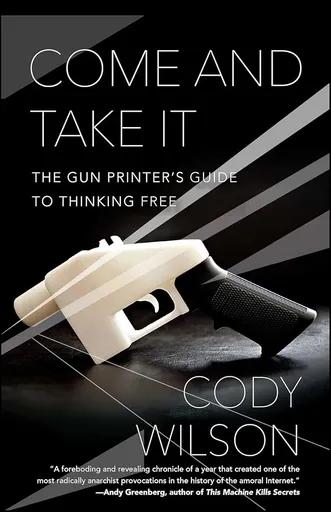

It’s been well over 10 years since Cody Wilson and his organization Defense Distributed released “the liberator”, a 3D printed, single shot pistol. Come and Take It: The Gun Printer’s Guide to Thinking Free details the fundraising, design, and development of the gun. It’s a lousy gun, but that wasn’t the point. It was a watershed proof of concept that heralded hundreds of designs that increased logarithmically as the price of consumer 3d printers decreased. When Defense Distributed was designing the liberator in the early 2010s, they had to spend thousands just to lease 3d printers, with companies trying to repossess after catching wind of the unpalatable use case. On the private sector Wilson muses:
I’ve been telling everyone since Indiegogo pulled us down that it was going to be this, quote, private sector that we’d have to overcome first. That Stratasys and these other guys act this way doesn’t surprise me. It’s this whole collusive, Family America thing. Industry as the engine of public policy. I mean, I literally just got back from the ATF, man. I know I’m doing this whole libertarian, federalis-trying-to-reach-us thing, but at this point only the government has been willing to not cut my legs out.
By the 2020s you could buy a Creality Ender 3 for just over $100; communism with Chinese characteristics ironically delivering more freedom than American capitalism.
Even today it’s the private sector mostly chasing 3d gun printing into the shadows, onto more obscure platforms. The main subreddit for this, Fosscad, has been banned, and it’s soon to be functionally crippled on Discord with upcoming ID requirements for age verification.
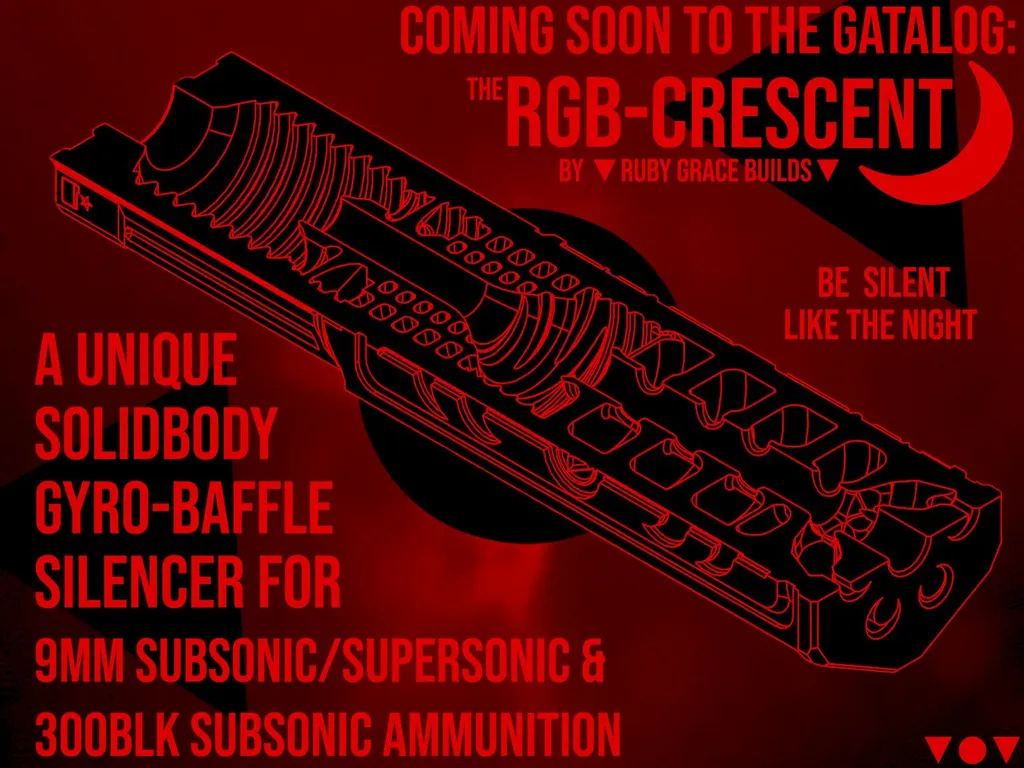
Perhaps the most high profile use of a 3d printed firearm was Luigi Mangione’s alleged killing of United Healthcare CEO Brian Thompson. The killer used a pistol with a silencer that likely lacked a Nielsen device, which is why he needed to manually rack the slide after each shot. Early photos and reports showed the gun but the exact details of the silencer’s construction are kept under wraps. It’s quite possible that it was 3d printed as well, perhaps a design like the RGB Crescent.

Of course, there are other means of making homemade silencers, but if you already have the printer, and have already printed the gun, printing the silencer is the easiest route. It’s a lacuna in the reporting that frankly feels deliberate, as if the press is afraid mentioning it will tear the hinges off an already opened Pandora’s box.
Cody Wilson is ironically now more reviled by the 3d gun printing community than by those outside it. He Molon Labe’d a bit too hard and mulled on the labia of an underage prostitute. The feds came, and arrested him. Defense Distributed was beset by ITAR allegations because publishing shapes is apparently arms trafficking. The case was settled in 2018, and while Defense Distributed’s repository for 3d printed gun files, DEFCAD, is still active it is widely assumed to be a federal honeypot.
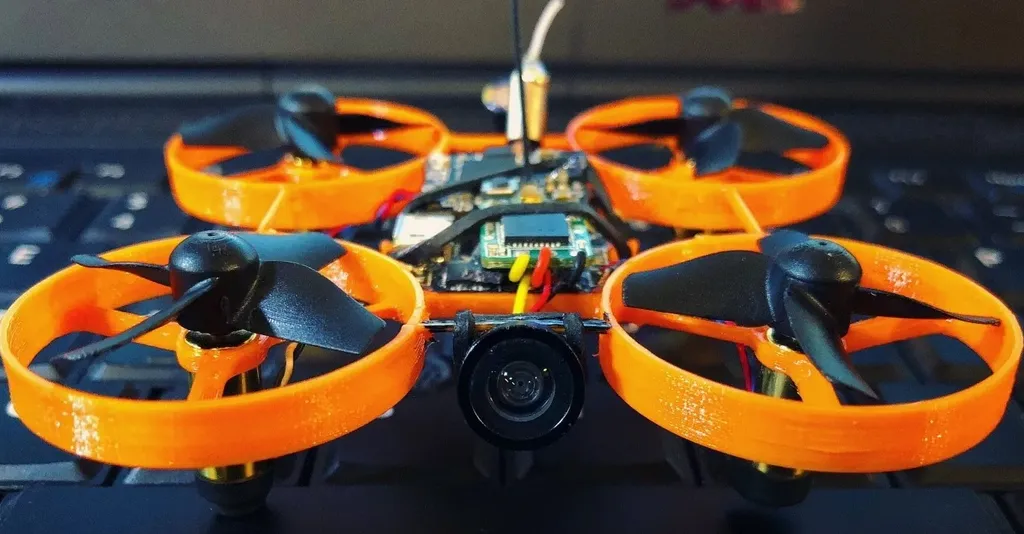
The mentality presented in Come and Take It need not be limited to firearms. Battlefields and soldiers are increasingly reliant on drones in modern conflicts. Most footage we get out of the conflict in Ukraine is FPV suicide drones. Iran’s distributed network of command and underground drone manufacture stymying America’s efforts to open the Straight of Hormuz is proof of their modern effectiveness. And despite apparent strategic troubles across the globe, I don’t even think this is completely lost on American policy. It’s become a requirement for drones in America to be manufactured in America. It’s important for national security reasons that there aren’t thousands of flying autonomous vehicles potentially built with backdoors accessible by foreign governments.

But if drones become standard arms in wars to come, should they not also fall in some way under the umbrella of the second amendment? The ACLU has even taken up the banner of citizen drone use, albeit on other grounds. Should creating your own drone be as legal in America as creating your own gun? Gun control proponents commonly refrain that the second amendment is obsolete because America and other nations have nukes. But if smaller powers can hold off their larger, nuclear armed aggressors with cheap drone munitions then to what degree is a right to keep and fly drones necessary for a well regulated militia and the security of a free state? They’re questions involving the nexus of free speech and monopolies on force, which is ultimately what the book is about.

My probably too European brain had never thought about nuclear weapons within the context of the American right to bear arm. What's the jurisprudence on it? The idea of autonomous drones makes it an even more curious question.
There are some libertarians who think that the individual right to bear arms should include nukes, but it's a silly, fringe notion even by libertarian standards. Supreme court rulings like District of Columbia v. Heller (in it's discussion of a previous case, US. v Miller) suggest that weapons in common use for lawful purposes are what are protected because they are what would be brought if a milita was called. Nuclear arms would fall outside this. But if drones become ubiquitous in warfare to the point that almost all soldiers have one, it's not exactly beyond the pale to interpret them as arms under the spirit and intent of the second amendment and subsequent supreme court rulings on it. It may even be more prudent for potential militia members to be familiar with drones than guns.