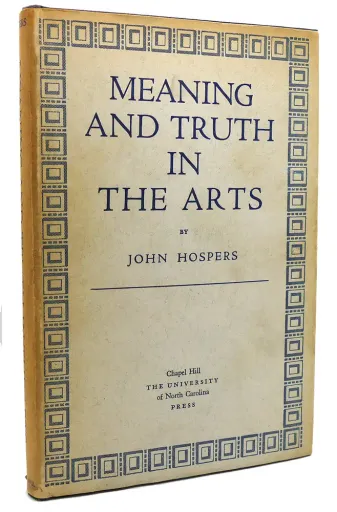

I intended to graduate-read this (meaning, skim strategically: introduction, chapters that were relevant to my interests, and conclusion (if you didn’t know, this is what is expected of you when you are asked to read a book after you have left high school)).
Hospers draws an axis of an art form’s dependence on external factors required to understand it and distributes art forms on it. On one side, the pure communication point, on the other, the pure form; so literature and music are extreme opposites, and in between, painting, poetry, etc. (you need great knowledge of the world to understand literature; you need little to no knowledge to understand music.).
Of course this is the forties and Bourdieu is still in high school, so Hospers ignores a lot of things yet to be written about the very social ability to taste arts as well as the game of references between works and the often scholarly knowledge required to even be aware of it; that said, his general point still stands: music tends to rely on internal coherence; literature relies mostly on coherence with the world.


