
Dec 12, 2024 4:42 AM
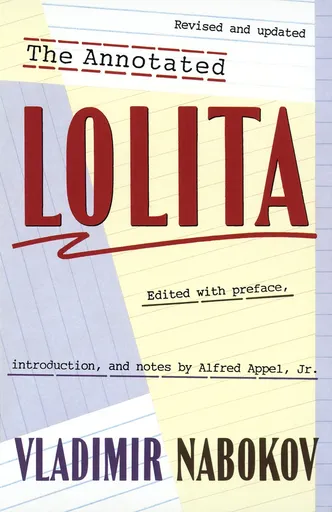
Reading Nabokov is entering into a circus. He's nothing more than a prose juggler. A semantic magician. He's a clown performing sleight-of-hand tricks for the children. You can really tell he's ESL, because he doesn't catch the spiritual essence of the tongue; he views the English language through a completely technical eye, as if he were performing a mathematical equation. Obvious also that he learned English by reading Shakespeare, as he tries to imitate the puns and tricks which he uses, but fails, as he's unable to tap into the same divine energy which Shakespeare invokes.
This is supossed to be the pedophilia novel, but for such a reputation the work really lacks in this aspect. Dolores is twelve. For reference, let's remember that Juliet was thirteen (and Lady Capulet, Juliet's mother, married at even younger age). So what's even the fuss about? Are we going to next be calling Romeo a pedophile? Or can we just accept that in different times different values reigned? Humbert exists in that interregnum where the old world is dying and a new order is coming forth.
Now onto Humbert Humbert. Another way in which the reputation of the novel lies to you. You come in expecting some kind of disgusting, completely irredemebale evil person. Instead what you get is a British sex-fiend, something you can find today in any Bangkok bar. Humbert isn't even the one seducing Dolores! He's actually the victim here.
I didn't even finish the book, I had around thirty pages left, but by then all my willpower had left me. I can only endure so much.
12 Comments
1 year ago
WRONG
1 year ago
"This is supossed to be the pedophilia novel, but for such a reputation the work really lacks in this aspect. Dolores is twelve." Fuck off. "Instead what you get is a British sex-fiend, something you can find today in any Bangkok bar." Fuck off. "Humbert isn't even the one seducing Dolores! He's actually the victim here." Fuck off. Take your trolling and shoddy satire elsewhere.
1 year ago
The book itself acknowledges that if Humbert had arrived just a few years previously in America his relationship with Dolores would have been legal, as the legal age of consent in most of America (as in most of the world) was 12 just a short time before, or lower. Spare me your pearl-clutching. As per Dolores being the predator, I'm not the first one to articulate this sentiment. Quoth: > In 1958, Dorothy Parker described the novel as "the engrossing, anguished story of a man, a man of taste and culture, who can love only little girls" and Lolita as "a dreadful little creature, selfish, hard, vulgar, and foul-tempered". In 1959, novelist Robertson Davies wrote that the theme of Lolita is "not the corruption of an innocent child by a cunning adult, but the exploitation of a weak adult by a corrupt child. This is no pretty theme, but it is one with which social workers, magistrates and psychiatrists are familiar." And please, would you mind actually engaging with the subject at hand, instead of just yelling "troll" when you encounter someone who has a radically different opinion of that which you hold?
1 year ago
You misunderstood the novel. The perspective is from a male abuser; Humbert takes the child Dolores as a little sweet, sexy angel who he can play and toy with at his will, but slowly, as she ages and matures, and once she has been defiled, the girl becomes the little mean devil because Humbert loses control over her. You weren't supposed to leave the novel thinking little girls are demons. You were supposed to see the world through the lens of a male manipulator who only desires sex and power over women.
1 year ago
A novel is not (at least entirely) something to be "understood," but something to be experienced. I don't know what Nabokov had to say about the "meaning" (or if he even had anything so say at all) and I don't care if he did. Nevertheless, this comment is idiotic, as the novel is written in such a way that you can't trust the veracity of anything Humbert is telling you. As I said, I'm not the first one to interpret Lolita as being a predator. Did you even read the work? She often psychologically manipulates Humbert to get what she wants. Initially she has Humbert pay her for sex. And Humber didn't "defile" her. She defiled herself by sleeping with an older man at the summer camp.
1 year ago
"as the novel is written in such a way that you can't trust the veracity of anything Humbert is telling you... She often psychologically manipulates Humbert to get what she wants... She defiled herself by sleeping with an older man at the summer camp." Damn, you almost got it! As you rightly pointed out, you can't trust a word that comes out of the narrator's mouth, which is why you, as an intelligent human being, should conclude that a 12 year old girl cannot play the seductress. But ah I guess the act fooled you as well as a little girl, so it looks like you're in appropriate company.
1 year ago
You believe it is impossible for a twelve year old girl to be manipulative and use her sexuality to obtain what she wants. I believe the opposite. Therein lies our debate. I can't convince you to change your opinion. Further discussion is naught. Let's agree to disagree. I hope from this conversation you learn not to accuse people of "misunderstanding" works of art. The "media literacy" meme is played out.
1 year ago
Erm, no— you're a stupid dog, and you misunderstood the novel. Suck my dick faggot.
1 year ago
You're such a pussy that you're scared of 12 year old girls bullying you?
1 year ago
"The book itself acknowledges that if Humbert had arrived just a few years previously in America his relationship with Dolores would have been legal, as the legal age of consent in most of America (as in most of the world) was 12 just a short time before, or lower." I'm aware. More importantly, the book talks about how he keeps his love for Lolita a secret at every hotel they visit, for fear of stigma. Any sincere reader realizes that this indicates it wasn't socially accepted, even if it was legal. "As per Dolores being the predator, I'm not the first one to articulate this sentiment." Cool, I didn't claim that. "In 1958, Dorothy Parker" Spare me the argument from authority. "the engrossing, anguished story of a man, a man of taste and culture, who can love only little girls" This doesn't claim Lolita is the abuser. At least try to avoid non sequiturs. "a dreadful little creature, selfish, hard, vulgar, and foul-tempered" I don't deny that. She's also a kid whose mother died (or is at least seriously ill, as far as she knows). I don't blame her for that. "not the corruption of an innocent child by a cunning adult, but the exploitation of a weak adult by a corrupt child. This is no pretty theme, but it is one with which social workers, magistrates and psychiatrists are familiar." He is, without a doubt, deluding himself that he's not a brute. The scene towards the beginning, where she's playing with the apple, and he tries to use her for pleasure is entirely wrong. She's being a carefree child and he's the one sexualizing her. You can't argue the guy seeking out child prostitutes wasn't already corrupt. "And please, would you mind actually engaging with the subject at hand, instead of just yelling "troll" when you encounter someone who has a radically different opinion of that which you hold?" Fine, I'll won't call you a troll and I most definitely won't call you a pedo.
1 year ago
Spot-on about Nabokov, who I've never enjoyed. "He views the English language through a completely technical eye, as if he were performing a mathematical equation" is brilliant. The rest of this review, however, is insane in a way that makes me think it's parody.
1 year ago
The reviewer insinuating that a child can understand anything to do with sex makes me want to fucking vomit. I think they're 're also missing the mark by limiting his language to an 'equation'. In Speak, Memory, his prose is fluid and continuous because he's seguing between memories across time (and I can't stand Proust). In Lolita, there's a lyricism from the opening 'tip of the tongue' blended with the obvious intent to disgust. It strikes me that calling it 'mathematical' casts him as having a quizzical, foreign, almost avian disconnection to language when it's the opposite — he has such an understanding of rhythm and the rich shapes of sound that the prose inhabits a sublime naturalism. It's as if his passages underwent natural selection in a universe governed by beauty One of my favourite passages from Speak, Memory (also written in English): "From my place at table I would suddenly see through one of the west windows a marvelous case of levitation. There, for an instant, the figure of my father in his wind-rippled white summer suit would be displayed, gloriously sprawling in mid-air, his limbs in a curiously casual attitude, his handsome, imperturbable features turned to the sky. Thrice, to the mighty heave-ho of his invisible tossers, he would fly up in this fashion, and the second time he would go higher than the first and then there he would be, on his last and loftiest flight, reclining as if for good, against the cobalt blue of the summer noon, like one of those paradisiac personages who comfortably soar, with such a wealth of folds in their garments, on the vaulted ceiling of a church while below, one by one, the wax tapers in mortal hands light up to make a swarm of minute flames in the mist of incense, and the priest chants of eternal repose, and funeral lilies conceal the face of whoever lies there, among the swimming lights, in the open coffin."