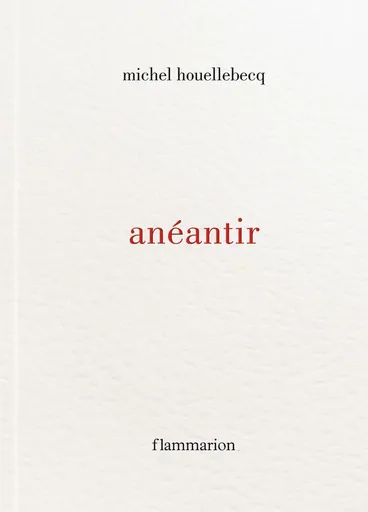

Houellebecq has the detachment of a nihilist and the heart of a romantic. I think the nihilism is mostly aesthetic in this book. It allows us to look at the characters and the world with a sort of objective distance and amused light. The detached musings of the narrator and the main character also give rise to some casual dark humour which I found hilarious in French.
Of course, his classic themes of loneliness, sexual perversion, and the general hollowing out of the soul comfortably find themselves in the novel, with added emphasis on sickness and death. But all this is background to what he's ultimately trying to foreground: love and hope. They are the real heroes of the book. Finally, we have a Houellebecq where hope is a real off-ramp, not something to be completely crushed.
The last part reminds you that you should be thankful to be alive.
