
The Topeka School
Write Review
The Topeka School
Write Review

Surreal Speech Situation

User avatar fallback
Jun 19, 2026

An ornately sculpted, highly enjoyable, and sometimes infuriatingly opaque novel-shaped object. I call it that because the more I think about it the less it seems like a "novel" as a straightforward story. You can definitely retroactively extract a story from the book — one about the diverging high school years of debate-club twerp Adam Gordon and his maladjusted classmate Darren Eberheart in 1990s Topeka — but the text's division into sections pegged to different protagonists (Adam, Darren, Adam's parents Jonathan and Jane) both scrambles the chronology and diffuses the center of narrative interest, for instance by giving us a long section where Jonathan is telling us about his upbringing as a diplomat's son in an East Asian country.

The artfulness of the book then consists in Lerner's engineering acumen in stress-testing "story": how much he can pull things together and make them seem interesting (instead of just random or boring) after pushing them apart. And I think two things work in his favour. The first is that he really has a strong gift for deep, convincing storytelling. Both of Adams' parents' stories are enthralling, and Lerner is very attentive to nitty-gritty sociological detail about, for instance, the social mores of toxic suburban white boys or the depressing environment of a retirement community.
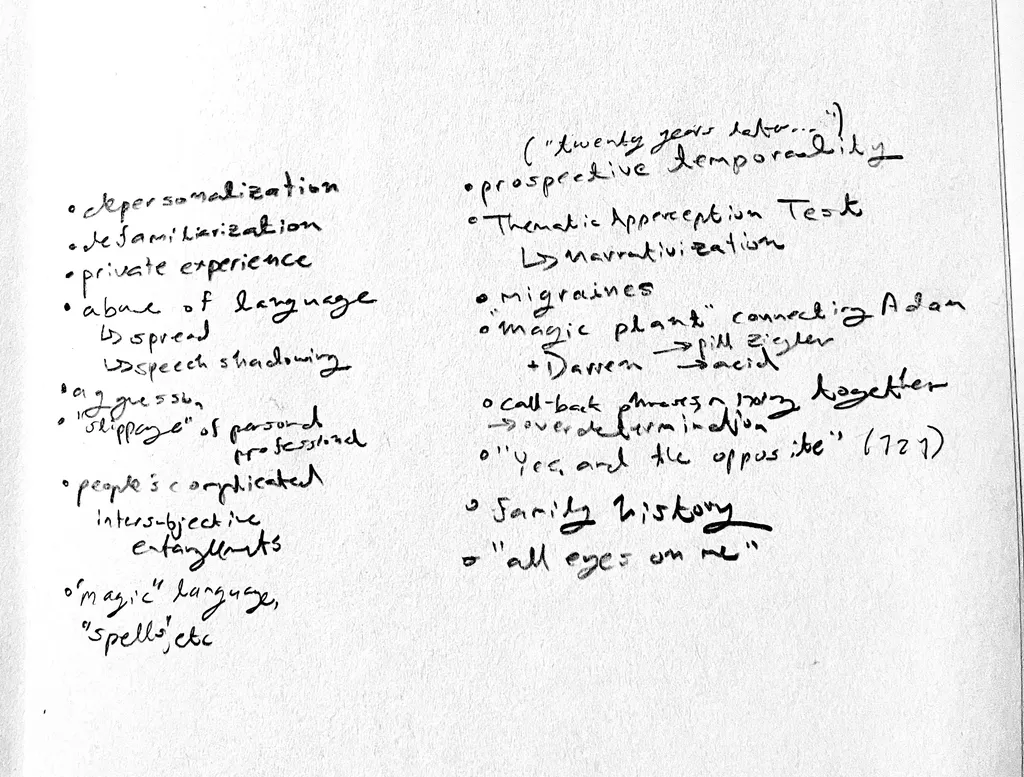

The other thing is Lerner's ability to orchestrate call-backs and connections across the disjointed, split-up text. Some of these are thematic, e.g., Jonathan's childhood echoes the wider emphasis in the book about the connection between (what I unfortunately have to call) toxic masculinity and American privilege. Some are more formal, situations with the same "shape" recurring: a girl letting her egocentric stepfather talk and talk while she slips away is echoed by the psychoanalytical practice of "speech shadowing." And some of these call-backs are more ostentatiously "random," e.g. Lerner making an early mention of the 2Pac album All Eyez on Me and then later inconspicously throwing the same phrase in a completely unrelated passage knowing we'll trip over it.

Nearing the end, I became gradually less convinced that these call-backs "added up" to something bigger and started to feel they were often just ways for Lerner to show off his cleverness. But while you're in the book itself they're very pleasurable, and they do put you in a certain strange, dreamy headspace: as if you're in the skull of a paranoid poststructuralist, where everything is connected and where language has eerie magical powers.

Lerner's fascination with the impersonal magic of language also ties into what's baffling or disappointing about this otherwise great book's ending, which after conjuring a view of the world as infinitely complex and connected, basically ends up suggesting that MAGA is a product of language dysfunction, just a scream into the void of senselessness, and that it can be defeated by a white boy with flow using his mad rap skillz. I don't think so, cuh!

The notes I wrote for my book club:

IMG_6195

0 comments
User avatar fallback

No comments yet. Be the first to share your thoughts.