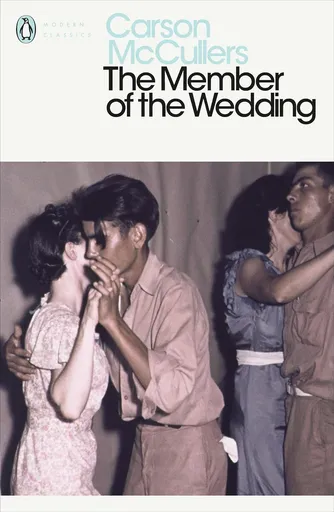

Another reread from my favourite author πββοΈ
This book reads like The Heart Is a Lonely Hunter, written by a much more mature and confident writer. All the fluff has been cut, and rather than floating in between four disparate characters with four distinct issues, the novel focuses on one main character, Frances Addams who almost identical to THIALH's Mick, is struggling between the cusp of childhood and adulthood.
Much like the characters, McCullers restricts the novel's setting, confining the majority to the family kitchen. With this new control over the narrative, the feeling of stagnation is presented in a much more effective way, as rather than zipping in between the worlds of the various characters, the reader is kept mostly to this one room.
You picture Frankie in this kitchen with her younger cousin, John Henry, and her nanny, Berenice, as the sounds of children are outside on the street, tempting the juvenile protagonist to go out and playβ but she's too old for childish play now. Teenagers can be seen walking past the window in groups, leaving Frankie uninvited because she's too young. The radio gives news of the wider world, of politics and wars, which, again, Frankie is locked out of.
And the kitchen is described in such an uncomfortable and disturbing way. The three play bridge every afternoon, and Frankie comments that 'if you would eat those old cards, they would taste like a combination of all the dinners of that August, together with a sweaty-handed nasty taste.' Honestly, this was such a disgusting thing to say, and I wince to quote it here, but it works so perfectly to capture that gross, stifling feeling.
Focusing the novel on this one room makes the dreamlike style of McCullers come through even more. Nothing really happens in this room except talking. It's tangents and digressions, childish monologues and "remember when" conversations. In the kitchen no plot points are spoken about in the present tense; it is all recollection after the fact. Referencing time in this backward way, jumping forward only to recall another memory, disorients the reader; you will finish this novel expecting a whole summer to have passed when really only four days went by.
If you've read THIALH you'll remember Mick's 'inside room' which was a space in her head where she kept all her dreams and would retreat to when she felt bothered. McCullers develops this concept into a simpler and more eloquent separation between the general inside and outside.
The kitchen, as I mentioned already, is the place where Frankie lives. The tension much of the novel is built around is based on the discomfort she feels in this room. When Frankie begins to dream and talk of the wedding, she starts to linger in the doorway on the cusp of the indoor and outdoor. However, once outside, she is immediately shocked by the amount of strangers she meets, and she becomes unable to contextualise herself and her identity in this larger setting. The Blue Moon bar in the beginning, when Frankie does not hold the dream of the wedding, is an intimidating adult space where she is not welcome, but once she has a full grip of her fantasy, and is able to see her life in context of the wedding, she starts to "connect" with strangers and feels confident enough to enter inside the bar.
I think this is a much more effective way to present the discrepancy between the fantastical inner world and the reality of the outside world. The conflict still sits in her head, and her perception of the world changes depending on how she feels. The inside and the outside are integrated into one.
As I said in my previous review, I really think this novel is McCullers's best work. It's a 10/10 novel. I cannot pick a single fault with it. She puts so perfectly into words the quiet tension loneliness gives you.
