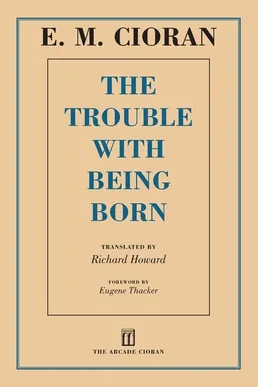

Aphorisms usually reward lingering. They remind me of The Stranger, where Meursault imagines that a single day of freedom would provide enough memories to occupy the rest of his life. The best aphorisms work in much the same way: one sentence can be enough to fuel years of reflection. The Trouble with Being Born produced the opposite experience. Cioran's own admission that the choice of aphorisms was because of fatigue feels impossible to ignore. The suffering that gave birth to the aphorisms also seems to flatten them. Rather than inviting contemplation, they accumulate until they blur together. Even so, the very first pages contained one that peaked my special interest in enlightenment:
I was walking late one night along a tree-lined path; a chestnut fell at my feet. The noise it made as it burst, the resonance it provoked in me, and an upheaval of all proportion to this insignificant event thrust me into miracle, into the rapture of the definitive, as if there were no more questions--only answers. I was drunk on a thousand unexpected discoveries, none of which I could make use of...
I've been waiting to see a Cioran review here! I've heard him referred to as one of the best prose stylists of all time, based mostly on his French, I think. The tone and the pessimism were described are Nietzschean in level, meant as the highest praise. I believe the experience you went through is what was intended, actually, as the biggest fans of him that I know are poetically inclined, with the effect largely coming from the ordering and juxtaposition of the aphorisms. If you liked this, On the heights of despair is supposed to be even better. If you are philosophically inclined, Eugene Thacker has a couple of shorter works that put things like Cioran's perspective into context.