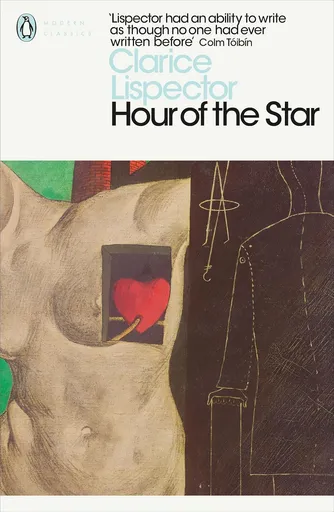

a major obstacle in my understanding of TRUE LITERATURE is that i'm just not all that bright. when i asked around for lispector recommendations, i was told the hour of the star is a good short choice for beginners (read: midwits such as myself)
i found i had a hard time understanding rodrigo's narration sometimes. he's an interesting framing device, but i don't really understand the point. however, i think i understood macabéa...or whatever rodrigo tells me of her. there's something industrial in the narrator's artistic ownership of this girl
here's what i mean--when i studied the history of anglo work culture for a paper, i had to squint to see the laborers behind the big picture. most urban workers from the early modern period onward lived like our heroine (tiny dwelling, multiple roommates, precarious job, scanty education, poor health, few pleasures other than those which mass popular culture brings them). the only proofs of their existence nowadays are a handful of legal records. the vast majority of this population just didn't write much that has made it to the present; their more educated contemporaries could misrepresent them out of ignorance, condescension, or prejudice
obviously there's no diegetic way rodrigo could be this privy to macabéa's inner world. even if she had ever told him about her feelings, she doesn't have the introspection necessary to express herself with such detail. or does she? maybe it doesn't matter. yet we must take his word for everything about her, the way we have to use the words of lettered observers to paint a picture of a lowell mill girl
besides the industrial-ness, it also strikes me as nabokovian that the literate rodrigo is the recorder (thus, arbiter--maps and territories &c.) of macabéa's life and mind and tentative stabs at being a person. or i guess it's modern, if we connect a few dots. and if there is a critique here of how men appoint themselves as interpreters of women, disbelieving that women can be trusted to interpret themselves, that's modern too
lately i've been reading mostly about rich people, so it was refreshing to read about someone in a common context: one of the millions of anonymous workers whose capacity for reflection and expression, their birthright as human beings, has been obliterated by the grind--one of millions of lifelong tragedies playing out briefly until they're destroyed (by, for example, a hit and run). their meanings are only revealed at the hour of the star
anyway, if this book is as opaque as lispector gets, i'd be happy to read more
