

Aug 06, 2026
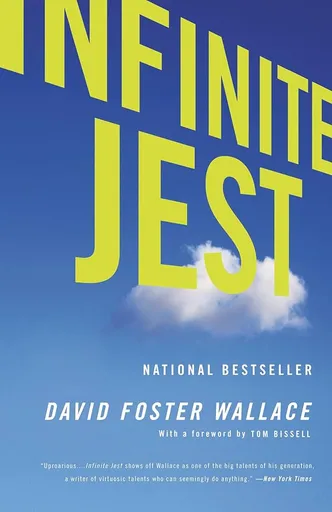
“Forget so-called peer-pressure. It's more like peer-*hunger.* No? We enter a spiritual puberty where we snap to the fact that the great transcendental horror is loneliness, excluded encagement in the self. Once we've hit this age, we will now give or take anything, wear any mask, to fit, be part-of, not be Alone, we young. The US arts are our guide to inclusion. A how-to. We are shown how to fashion masks of ennui and jaded irony at a young age where the face is fictile enough to assume the shape of whatever it wears. And then it's stuck there, the weary cynicism that saves us from gooey sentiment and unsophisticated naïveté. Sentiment equals naïveté on this continent. ... Hal, who's empty but not dumb, theorizes privately that what passes for hip cynical transcendence of sentiment is really some kind of fear of being really human, since to be really human (at least as he conceptualizes it) is probably to be unavoidably sentimental and naïve and goo-prone and generally pathetic, is to be in some basic interior way forever infantile, some sort of not-quite-right looking infant dragging itself anaclitically around the map, with big wet eyes and froggy-soft skin, huge skull, gooey drool. One of the really American things about Hal, probably, is the way he despises what it is he's really lonely for: this hideous internal self, incontinent of sentiment and need, that pules and writhes just under the hip empty mask, anhedonia."”
No comments yet. Be the first to share your thoughts.