

May 31, 2026
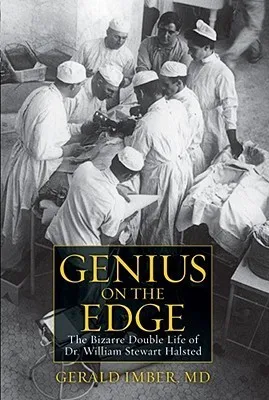
“The American public was generally unaware of William Stewart Halsted. He was not as famous as Osler, Welch, or Cushing, nor as prolific as Kelly. He didn’t make speeches or befriend the powerful, and the fruit of his seminal work would not fully ripen for at least a generation. At the outset of Halsted’s career, fewer than a dozen doctors restricted their practices to the unsustainable, barbaric, and off-putting practice of surgery. Over his 33 years at the helm of surgery at Johns Hopkins, Halsted not only invented an entire surgical philosophy, he instituted a system to inculcate in surgeons this philosophy, which spawned several generations of the finest teachers of surgery in the world. His goal was to train “not only surgeons but surgeons of the highest type, men who will stimulate the first youth of our country to devote their energies and their lives to raising the standards of surgical science." In this, his success is everywhere to be seen. Of Halsted’s 17 residents, 12 became professors of surgery, associate professors, assistant professors, or surgeons in chief. Forty-six of his 55 assistant residents held academic titles, and the residents of his residents came to lead major surgical faculties throughout the country. Direct and indirect Halsted disciples became professors of surgery at Johns Hopkins, Harvard, Yale, Cornell, the University of Virginia, Columbia, the University of Cincinnati, George Washington, Stanford, the University of California, and a host of other places. Halsted descended clinical professors, associate professors, and assistant professors are too numerous and far flung to enumerate. Virtually every academically affiliated surgeon can trace his or her teachers, and his teacher's teachers, to William Stewart Halsted.”
No comments yet. Be the first to share your thoughts.