I have long been a fan of Japanese mystery visual novels- From the mainstream hits like Ace Attorney to cult favorites such as Zero Escape and the metafictional epic Umineko. Earlier this year I started digging into the the roots of the Japanese mystery fiction which inspired these games. As it turns out, most of what we have has only been translated within the last five years, and by a single publisher - Pushkin Vertigo Press. But that means that the English-speaking world can collectively discover these classics together as they get released in real time.
Detective fiction first flourished in Japan in the early 20th century by writers such as Edogawa Ranpo and Seishi Yokomizo. They are obsessed with the locked room mysteries coming from England, France, and the United States. These Japanese writers will more frequently credit Golden Age writers such as John Dickson Carr and Ellery Queen for inspiration rather than more obvious picks like Agatha Christie and Arthur Conan Doyle. And so, Japanese mystery writers codified their own style of mysteries as Honkaku, or Orthodox. It has a simple requirement: All clues required to solve the mystery must be present in the narrative before the big reveal. This emphasis on "fair play" led to the enduring popularity of Honkaku novels.Five decades later, we see the birth of , the New Orthodox school. These are decidedly post-modern, mysteries that aren't afraid to include mind-bending, allusive, or metafictional elements into their narrative. The Tokyo Zodiac Murders by Souji Shimada, published in 1981, is credited as the very first Shin Honkaku novel. It is also widely ranked as the third greatest Japanese mystery novel of all time. So I read it. And even though I read this novel six months ago, I am writing a review now because its FUCKING awesome.The novel opens with a 40 page manifesto written in the 1930's by Heikichi Umezawa, a wealthy old man obsessed with astrology... and women. He details his sexual history and failed marriages, before revealing his plot. He plans on murdering six young women in his family - daughters and nieces - and assembling their corpses according to astrological principles to alchemize the perfect woman, an "Azoth," for his sexual pleasure.Then he dies, and in a locked room no less. Then his adult daughter dies, head bashed in within her home. Then the six young women disappear. Months later, their mutilated corpses are found all over Japan. Did Heikichi Umezawa orchestrate these murders from beyond the grave? Did he fake his death? Is the Azoth real?In the present day, two amateur sleuths try to get to the bottom of these sordid crimes, five decades after they occurred. They comb through the available evidence, the limited survivor testimonies, and the speculations generations of true crime obsessives who previously tried and failed to find the murders.What's intriguing about the Tokyo Zodiac Murders is that, beyond the initial manifesto, its almost entirely exposition, the detective who is familiar with the crime explaining the details to the one who is not. They don't grow as people over the course of the novel, they aren't connected in any way to the crime, and (besides a bet with local law enforcement to solve the mystery within a week) there isn't a particular rush, either. But that's the whole point. This novel isn't about them, its about YOU, the reader. You are the third and most important detective. This novel is designed to give you all of the information you need to puzzle it out yourself. The author himself even stops the narrative twice, breaking the fourth wall to inform the reader to stop and solve the mystery before reading onwards.And goddamn, is that mystery worth it. I like to think I could have solved it with extra time, but I was just too excited to see how it would all resolve. I've never seen the solution to a mystery be so elegantly simple yet so fucking unhinged. My jaw was on the floor, I was hooting and hollering, I was pumping my fist in the air. It's everything I could have wanted and more. Souji Shimada has one more book in translation - And I will read that as soon as I can. I look forward to reading more Shin Honkaku mysteries.(And if anyone has recommendations for other literary mysteries, I'd appreciate them. I love The Name of the Rose, for instance.)
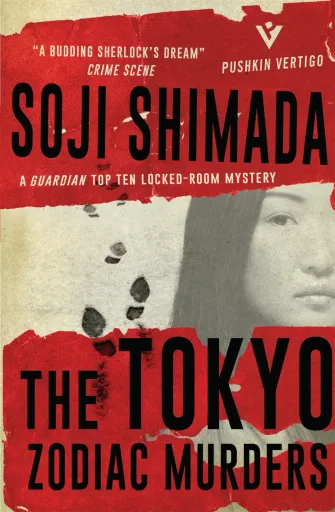
An Undersung (and Psychotic) Classic of Japanese Detective Fiction

Jul 10, 2024

This sounds fantastic I'll have to look into this. I picked up the Honjin Murders (Seishi Yokomizo) and it felt very... stilted even with the concession of it being older. Would you recommend trying something else from him or nah?
I have also read Honjin Murders since Yokomizo is seen as the king of the O.G. honkaku scene- but I agree, I was a little underwhelmed by it. But I think that's the point, since that book is designed to deliver you a pure locked room mystery without being hampered by silly things like "plot" or "characterization." I'm actually about to read Honjin's sequel Gokumon Island since that's ranked as the greatest Japanese detective novel of all time (Compared to Tokyo Zodiac's #3 and Honjin's #10.) But of all the Japanese detective authors Yokomizo is definitely easiest to find, since he's received a whopping six translations within the last six years. Once his range of classics are translated maybe we'll some of the weirder authors brought over.