
Mar 22, 2025 6:10 AM
English translation : The Walker-through-walls and Other Stories
This War/post-War author enjoys pushing the absurdity of bureaucratic minds to their ends. More often it is about lamenting the absurdity rather than just mocking it.
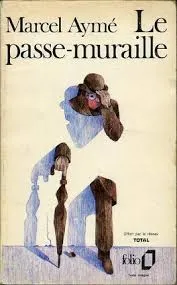
The Walker-through-walls is his most well-known story (it has its own statue in Montmartre, Paris), where a desk jockey suddenly can go through walls. He then tortures his boss in retaliation for years of petty humiliations, then develops bigger ambition. (Another well-known story of Aymé, not included in this book, would be The trip across Paris)
In another story, a writer tells in his diary the setting up of La Carte (the card, translated as The Life-Ration): people will now be given a certain number of days to live per month, all according to their social value. At first very enthusiastic, he is enraged when he discovers he doesn’t qualify as a useful citizen and has to queue with the retired and the prostitutes.
More than one of us got booted on the bottom for complaining about the time we were kept waiting. I endured this humiliation with silent dignity, but I looked hard at one particular sergeant while my whole being cried out in protest. It is we who today are the damned upon the earth.
Aimé is never cruel towards his characters, and there is great empathy in his writing for vice and virtue. Yet he doesn’t shy away from mediocrity, and he often gives them enough rope to hang themselves.
12th March. Went yesterday evening to have a drink at the flat of Perruque, the Academician. In order to preserve the myth that those artistic throw-outs are 'immortal' the Government has put them all in the whole-time life category. Perruque's complacency and hypocrisy were really revolting. There were about fifteen of us there, all rationed and using up our last coupons for the month. Perruque was the only whole-lifer. He patronised us as though we were hospital cases, full of sympathy, but with a malicious twinkle in his eye, and overflowing with promises to look after our interests in our absence. The old mountebank was so obviously delighted at being one up on us that it was all I could do to stop myself telling him what I think of him and the dreary, turgid rubbish he puts on paper. I'd have done it too, if I didn't hope to succeed him one of these days in the Academy
That said, despite the laughs, his stories always carry some tragedy: all of them are born out of the War and the everyday cowardice witnessed during the Occupation, and, more importantly, after it.
This is En attendant, which simply tells the tragic, ordinary stories of a group of people waiting for food during the War.
Other stories have a fairy tale feel to them: a woman who can clone herself and uses her power to love the many men in her life; or in the Seven-league boots, a group of children comes to desire boots they believe to be magical and that desire disturbs the social order separating their parents.