

Quite the stylistic coup. Wilde's so synonymous with his witticisms that if you're to tell your aging, bookish-when-it's-conversationally-fashionable father that you're currently reading this book, it's more than likely the only thing he'll have to say to you is "That guy had quite the wit, huh!" before turning back to the fourth Season of the Netflix Witcher show, which he has been binge-watching for the last week, and which he will then scrutanise blankly for a further minute or two before he falls asleep. And haven't we all been there!
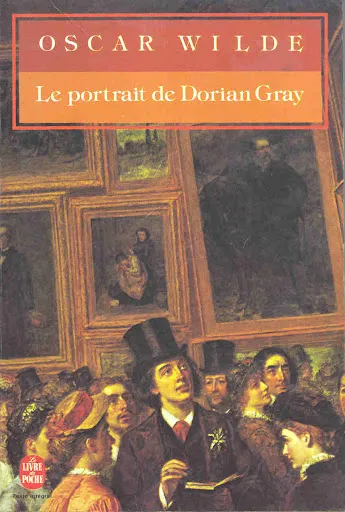
Anyway, what is more impressive than the cleverness with which Wilde spins his words is the self-awareness he has of the perception of said cleverness. Wilde's authorial voice is always unmistakable, even in the most mundane descriptions of street lamps and windows, but he only allows himself to appear entirely undiluted when his words unspool from the lips of Lord Henry Wotton, who is the ostensible antagonist of the story. Wotton spews a gorgeous combination of paradoxical fables and loquacious locutions; he is myriad combinations of wicked and hateful and hilarious and open. He is the literary embodiment of the allure of excess, of pleasure, of living for these things, and one can only possibly create a vision of such so pleasing if they themselves, down to the bone and deeper, understand this impulse, which Wilde, of course, did. As a player in a morality play, Wotton calls to mind Milton's Devil; if one is to be a corrupter of the souls of men, then the reader cannot be exempt. If you told me you made your way through this book without finding something, probably many somethings, said by Wotton, inviting, exciting, perhaps even fundamentally true, then I'd call you a liar. The genuine temptation is to the credit of the work.
It's strikingly modern that the question of The Picture of Dorian Gray is one of human 'nature' through the lens of its transient and fungible essence. I'd basically agree with Wilde's thesis that a person does not have a static 'nature,' but a capacity for many things that may or may not be realised based on the hows and whys and ways of the life they pursue. Dorian is not written to be a pretty cypher; he's intelligent and curious, caring, if not necessarily kind; he could have been a writer, or a politician, or even just one of many high-society gentlemen whose society, whose dinners and parties and conversations, became their art; true even of the loathsome Wotton. Instead, he never finds his art, and he never pierces past his own blue eyes. I don't know that sin is actually Gray's undoing. It is more a matter of complete disassociation from his essence, from any of its kaleidoscopic possibilities, this inability to see anything but the surface level of himself, that leaves him stuck between four dusty walls, a caricature of himself stretched over an aging canvas.