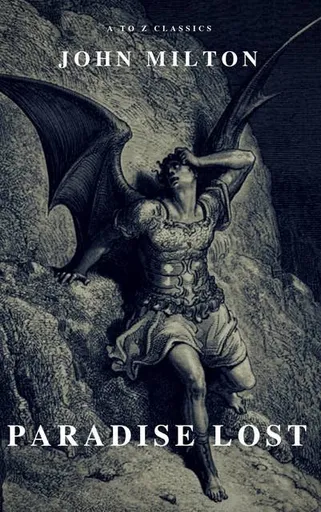

The legend of John Milton is almost as incredible as the legend his magnum opus reinterprets. Blind and poor, he nevertheless managed to dictate a poem about the story of Genesis in the style of Greek and Roman epics, fleshing out God's construction of the cosmos, the finer points of His law as delivered through Christ, and the dual fall of both Satan and Adam. As a work of devotion akin to the Sistine Chapel or the Shrine of the Grotto of the Redemption, it's second to none. As a work unto itself, it's pretty good too. Call it Christian fanfic par excellence.
I find it interesting how so much of the reputation of Paradise Lost revolves around the concept of Satan as hero, and wonder someone stupid enough to believe that could have possibly read something this complex. Satan is very clearly not a hero - nor would someone as devout as Milton portray him as anything but a villain. He is relatable, and cool, and sexy, because that's how evil comes to us. But he is only those things in part. His monologues ricochet between Tate-style motivational pap and pathetic self-pity (see how he laments his inability to feel Heaven's light in Book III). Milton's interpretation of him is evocative, but no less evocative are Milton's interpretation of God creating the world - truly some of the most beautiful poetry I've ever read - and Paradise coming to ruin after Adam's fall. How can someone read those passages and think of God as anything but good, or Satan as anything but evil?


I think we see Satan as a hero precisely because he’s flawed. Self-pity and delusions of self-actualization are relatable traits. But yeah, I can’t see many devout Christians rooting for him (although I really believe Milton knew what he was doing in this respect). N.b. I don’t think he was what you’d call poor, was he?