Žižek is an appropriately paradoxical figure given the privileged foreground of paradox throughout his thought. His spoken presentations and dialogues are accessible by way of his ability to enthusiastically convey his ideas through jokes, current events, pop culture, and provocative considerations of subjectivity. The radicality and difficulty of his work is (paradoxically) digestible in spoken form.
But, is it? Or is it digestible in the way an avocado is? We consume the mushy, tasty interior, but only at the expense of the hulking seed at the core of the fruit, the portion that must be planted and waited upon before it bears that fruit. It feels appropriate to compare Žižek to an avocado: it's a fruit whose edible portion is only possible because of a Real, indigestible kernel. When we prepare an avocado, its edible form is defined by the lack of this kernel, but a kernel which leaves an indelibly visible indentation, a concavity formed in the shape of what sustains it. That's about as much as I can massage that metaphor.
This is all to say that reading Žižek is a decidedly different venture than watching or listening. While following his spoken word is like being a rodeo clown enduring a frantically bucking bull, going every which way without losing grip on the thought at the center, following his written word is like taming one bull while two more are released, bucking & huffing. In fact, my spavined metaphors ambling about my point is a fairly accurate experience of this book: What is he talking about again? What is this metaphor in service of? Does he remember his point or was that abandoned for more fertile pastures a couple sentences back? (Of course, this is from the perspective of a moron with a sunsetting attention span—read the book for yourself, always).
The subtitle of this book is "Enjoyment as a Political Factor." I'm familiar enough with psychoanalytic/Lacanian "enjoyment" as a concept, especially by way of Žižek and Todd McGowan/Ryan Engley. I don't think "enjoyment" or "political factor" are discussed beyond the (punishingly long) introduction and the very final chapter. This is not to say all that is discussed is irrelevant or somehow worthless—far from it—but it's a very misleading assortment of words if one is seeking some elucidation on psychoanalytic enjoyment. This isn't even an especially renown or lauded work in the Žižek oeuvre, but Žižek himself claimed anyone who reads Sublime Object without reading For They Know Not What They Do will miss a crucial redefinition & elaboration on the political elements in the former. I ate my vegetables, so now onto more seminal texts in this little niche of theory & psychoanalysis.
Radical Subjectivity
The older I get, the less stable I feel in my identity. There's an evolving dissonance which dyes my experiences, casts a hue on them, like Heidegger's concept of "mood." From the Stanford Encyclopedia of Philosophy:
Heidegger accords to the mood of anxiety a special methodological role in disclosing the contribution that disposedness makes to our familiarity with a world. Because anxiety is a breakdown in our everyday ability to engage meaningfully with the world, it lets us notice what otherwise is too pervasive to attract our attention: namely, that our ability to to function in the world is sustained by an immediate, felt sense for how things matter. When overcome by anxiety, that mattering "collapses" and the affordances of the world show up as being "of no consequence."
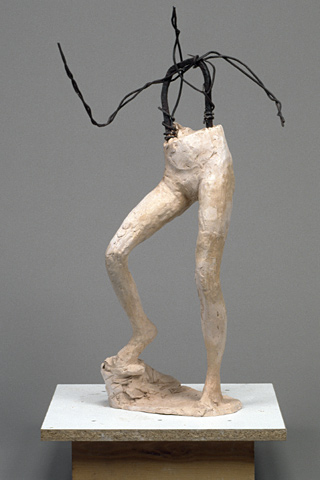
I think anyone could understand this sense of "no consequence," but that those personally familiar with anxiety disorders and/or forms of depression may be more acutely aware of this Heideggerian mood. That Lack, a hollow symbol, is part & parcel of the radical subjectivity on which Žižek elaborates. When we feel incongruent in our symbolic world, a square peg in a round hole, is when we're most painfully aware of our subjectivity: "We come across identity when predicates fail...identity-with-itself is nothing but this impossibility of predicates," a "confrontation of an entity with the void at the point we expect a predicate" (169). Identity & subjectivity are most pronounced when our failure to assimilate our occupation, our class status, our relationship to others, leads us to this question of "Who am I?" One cannot identify with this Lack though, or create an identity around Lack itself. An armature may be totally hollow, but it is nonetheless a shape, a structure, a symbol around which one builds.
Our engagement with the world is also constitutively defined by our own Subjectivity. Facial prosthetic artists create molds of actors' heads for latex masks. The molded bust is indeed a three-dimensional head, but within the head is nothing but the hollow, concave inversion of this figure. Similarly, our perception of phenomena is an impression of ourselves from within these objects. My car, for example, will never just be "a car" for me; if we could somehow look within that object, gaze at its constitution within my head, it would merely be the inversion of what I impress upon it, my own subjectivity. I am incapable of taking my car for "what it is."
While not explored yet in his body of work from this period, quantum physics becomes a recurring example for Žižek in the 2010s, and it is because it so precisely captures this notion of radical subjectivity contra the Real. Schrödinger's cat remains a great example: the cat really is both dead and alive, paradoxically, until the Subject opens the box and determines the status to be one or the other. It's the almost unbelievable idea that phenomena can exist in multiple states and become fixed as one for the perceiving subject. The conditions of our existence simply don't allow for us to perceive the Real as the Real, rather a symbolically diluted form for us & only us. Are there phenomena which we'll never perceive simply because of where, when, and how we perceive them? It's what makes the Real sublime; it is the "vertiginous experience that Truth itself coincides with the path toward Truth" (238). Truth is an asymptote, an endless approximation for us. The property of any given object is a "determination of reflection," or the "reflection-into-the-object of our own, the subject's, dealing with it" (296).
The "Inevitability" of History
Radical Contingency
It is this radical subjectivity which is conditioned by radical contingency, each of which is processed via our world of symbols. Heidegger proposed the notion of "thrownness" to describe the state of radical contingency we find ourselves living in & through, against our will and out of our control. Here, Žižek describes it as an "openness," an impossible which constitutes subjectivity, so the Subject itself is defined by being that "unfathomable X called upon, suddenly made accountable, thrown into a position of responsibility, into the urgency of decision in such a moment of undecidability" (347). All of history is built upon a mass of minds making decisions in a whip shot.
There's a great book by Michael Dobbs about the Cuban Missile Crisis called, aptly, One Minute to Midnight. What contributed to the event's majestic anticlimax was the number of contingencies bringing those countries a hair's width away from annihilation. Only upon retrospection do we smear a lacquer of inevitability over those events & moments, but Kennedy, Castro, and Khrushchev had no idea what would happen from one moment to the next. Dobbs' book reminds us it is not the cool, prudent prescience of global leaders which put the brakes on apocalypse—these men were shitting themselves with dread, operating for and at the behest of myriad individuals also acting & operating of their own accord.
We, as subjects, need the symbolization which retrospection affords us in order to define ourselves vis-à-vis history. Crucially, "our horizon of reading the past is determined by the contingent acts we made and which enforce the retroactive illusion of Necessity...since the only way to define our own, actual world is in terms of its negative relationship to its alternatives, we cannot ever determine the world we actually live in" (348).
The Inanity of Prediction
It's this principle which makes predictions of posterity nothing more than (occasionally entertaining) exercises in inanity. Articles & pieces staking their claims in what they believe will be the canon of the future (literary, cinematic, musical, etc.) are never more than darts in the dark. Similarly, when we laud an author for their prescience, it's often not the proof of a preternatural foresight, but a convenient convergence of symbols, two lines briefly intersecting. For example, David Foster Wallace is often commended by fans for his "predicting FaceTime/Zoom/Snapchat" because there's a means of telecommunication in Infinite Jest, called "videophony" (ha!), wherein users pacify the insecurity of seeing their own face by adopting increasingly outlandish backgrounds & costumes (filters, basically, as we know them now). What's arguably more impressive about this is Wallace's honing in on an essential anxiety about one's self and how that anxiety may be instantiated in forms of media. That human anxiety is timeless, whereas the congruity between videophony and FaceTime is more of a coincidence.
The same goes for any "prescient" author of sci-fi or the "foresight" of The Simpsons. It's the happenstance of similar phenomena, explained succinctly by Žižek: "the same illusion as that of a reader of a horoscope who recognizes himself as its addressee by taking contingent coincidences of the obscure predictions with his actual life as proof that the horoscope 'speaks about him'" (251). We live in a blur of of contingencies until they begin to coincide with contingencies past, connecting them by a narrative string and affording the blur a newfound shape & significance by its "inevitable" passage from the contingencies past. However, if modern social media manifested slightly differently, Wallace's videophony would remain a random point in a scatterplot of '90s fiction. How & where we draw the through-line is radically subjective, not the work of a cosmic grand design: "If the trace of an old encounter all of a sudden begins to exert impact, it is because the present symbolic universe of the subject is structured in a way that is susceptible to it" (365).
Freedom in Retrospect
The thrust of this book is the exploration of this notion of radical subjectivity apropos history:
The common wisdom about how history in actu is experienced as the domain of freedom, whereas retroactively we are able to perceive its causal determination, is therefore idiotic after all and should be reversed: when we are caught in the flow of events, we act 'automatically', as if under the impression it is not possible to do otherwise, that there is really no choice; whereas the retrospective view displays how the events could have taken a radically different turn—how what we perceived as necessity was actually a free decision of ours. In other words, what we encounter here is another confirmation of the fact that the time of the subject is never 'present'—the subject never 'is', it only 'will have been': we never are free, it is only afterwards that we discover how we have been free. (392).
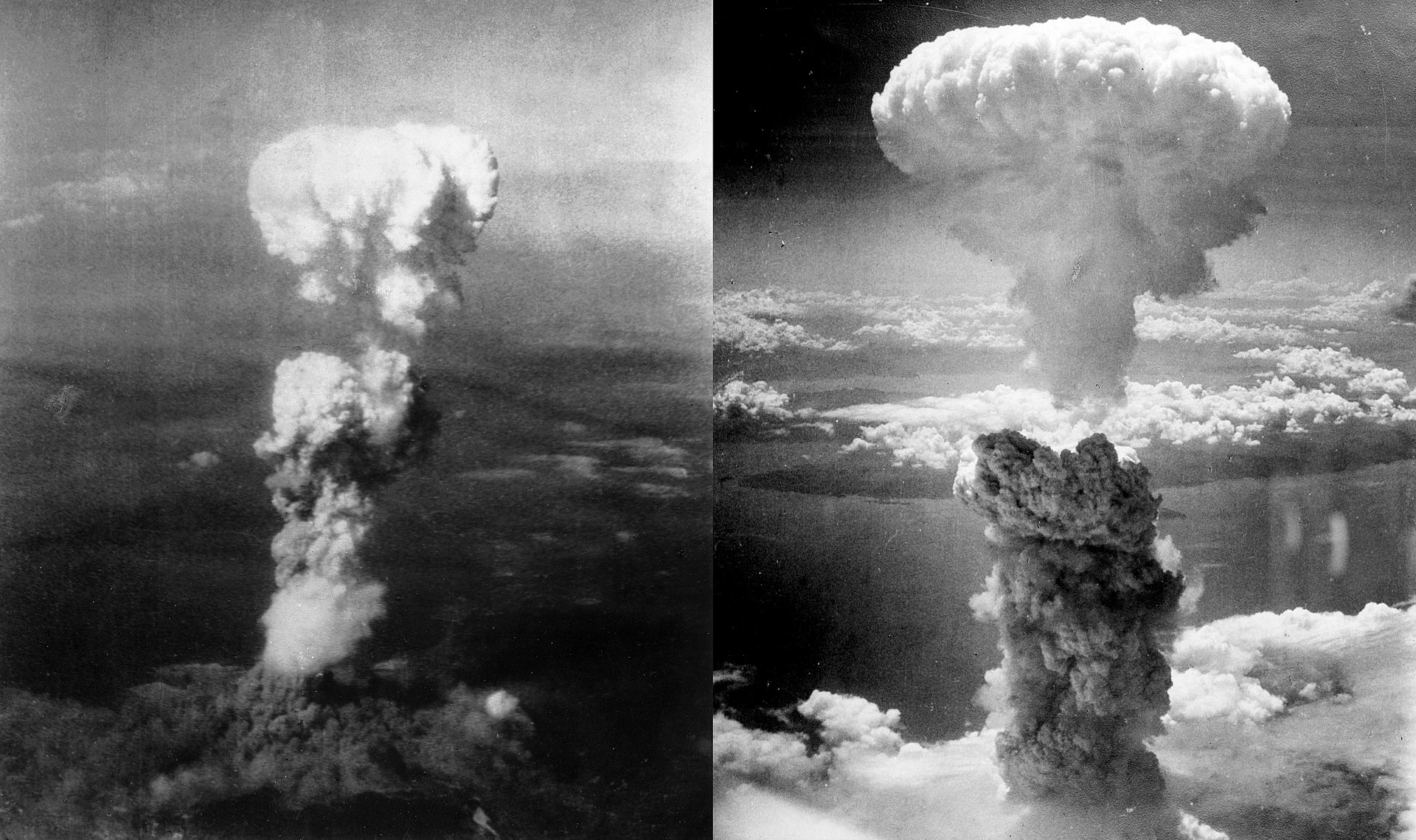
To offer a glimpse into the American education system in the 2010s: in my "Theory of Knowledge" class in high school, we divided the classroom into two sides and debated whether it was necessary to drop the atomic bomb on Hiroshima & Nagasaki. The purpose of the exercise ended up being to convey the inevitability of the bombing. The Japanese simply weren't going to surrender, and so we had no choice but to bomb them for the sake of the world. Staging a faux-contemporary debate of that decision precisely highlights the "idiotic" nature of retroactive causality. We were debating a choice already taken, and since we (especially in the Western world) retrospectively conceive that moment in history as Bomb Japan -> Japan surrenders -> WWII ends, it's embalmed in the annals of history as the only possible option. It's exactly the reversal of this notion, as Žižek states, that we should explore as subjects. Couldn't the United States have done something else? Given Japan's isolation among the former Axis powers, it's well within the realm of imagination that there were alternatives to obliterating civilian populations. In retrospect, we are witness to the sheer extent of our freedom, not the symbolically filtered perspective which always exults the actual occurrence as the only possible occurrence.
The "Missing Link"
It is here where we encounter the "vanishing mediator," the bridge between two symbolic universes, which vanishes in order to sustain the totality of our current symbolic universe. There is never a Biblical "And then there was light"—there are always contingencies which link each epoch, but discarded for their danger to a sense of historical necessity. It is not as if one day we were feudalists, and the next we were capitalists. So why "is this 'repression' of the 'vanishing mediator' necessary? Because a symbolic system has by definition the character of totality. There is meaning only if everything has meaning" (383, emphasis mine).
The coveted "missing link," that MacGuffin which promises total symbolic purity if discovered, is a symptom of our desire for a determinative history. However, "it is precisely because the chain of linear causality is always broken, because language as synchronous order is caught in a vicious circle, that it attempts to restore the 'missing link' by retroactively reorganizing its past, by reconstituting its origins backwards" (366). Again, we are defined by a constitutive lack, a concavity which assumes the shape of fugitive desires that never actually fit. I'll end with the famous Blaise Pascal quotation from Pensées, but heretically leave the last line out:
What else does this craving, and this helplessness, proclaim but that there was once in man a true happiness, of which all that now remains is the empty print and trace?
This he tries in vain to fill with everything around him, seeking in things that are not there the help he cannot find in those that are, though none can help, since this infinite abyss can be filled only with an infinite and immutable object. (113)





phenomenal review
phenomenonal WEBSITE. love using this for tracking my reading now.