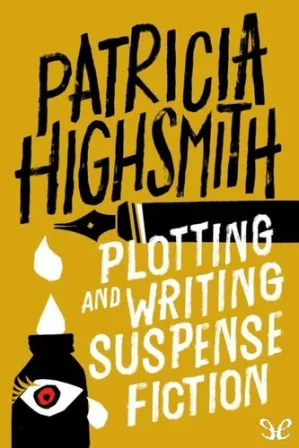

Most Writers-writing-about-writing books try to derive some rules of writing from their experiences and success, and/or from the successes of great writers. Highsmith has a more personal approach and describes her ways while admitting that, well, it's hers.
I FEEL I have been up to now setting down bits and pieces of information and suggestions which do not convey what it is really like to write a book. Perhaps that’s impossible. And people have such different ways of working, of thinking out a story and characters. Above all, it is the impossibility of laying down rules that hampers me in writing about writing. I do not wish to lay down rules, so all I can do is suggest lines of approach to a book, some of which may be helpful to some people —and maybe others of no help to anybody.
That personal aspect gives the book its value: no general rule then, just what works for her in concise and precise terms, and more important, the feel of it: how does it feel when the plot doesn't hold? When the idea doesn't take? When the pace or the atmosphere is off? How does it feel to marry two ideas? What clue can the writer find on the page and in her feel of it?
That said, most of it is very practical advice: how to develop the idea, outline it, plot it; how to read a first draft, knowing when to shelve a book, when to rework it; relationships with editors and publishers, etc.
Her explanations are linear, starting with the growth of a germ of an idea, then the use of experiences; atmosphere and pace; development (the basic events and elements one wants in the story); plotting (their place in the story); first and second drafts (the third draft being the final one: typing on carbon paper does create a limit that is not found in word-processing applications); "snags" and revisions. All this is then exemplified in an illuminating case study of one of her novels, The Glass Cell. And, except for one chapter discussing the faults and merits of the "suspense" label, and although she uses a lot of her works as examples, everything applies to any type of fiction writing.
I found there advice I haven't found anywhere else (and effective advice: it immediately got me through some of my snags), and more importantly, I found a just description of the mental states writers can go through. For Highsmith, they are not some beast to be tamed, or some defect of the soul working against the writer, but just another tool in writing. This way, she offers a more complete view of the craft - or at least, my experience of it.