Jun 3, 2025 3:45 PM
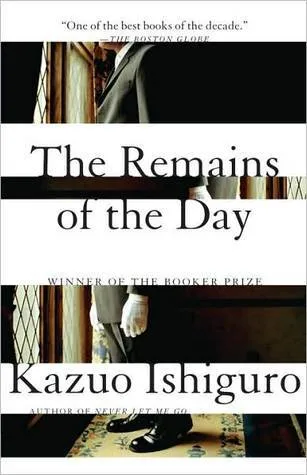
This book is an example of voice-driven writing done impeccably well. Stevens’ narration allows the story to bounce around temporally as new memories surface; it also allows events to change as Stevens corrects himself. An unreliable narrator and a story that follows a looping, indirect path through time—Ishiguro uses some pretty sophisticated tools. Yet, he pulls everything off beautifully. As the story goes on and we learn more about Stevens’ relationship with Lord Darlington and Miss Kenton, despite the continued insistence by the narrator that nothing is wrong, the sadness of Stevens’ life becomes more and more clear. By the end the feeling of tragedy is palpable.
I appreciated the fact that, while Ishiguro never sugarcoats Lord Darlington’s ugliness, he also does his utmost to show us why Stevens worships him. There is always a temptation for modern writers to turn a rich character into an evil buffoon, but Ishiguro insists on showing Darlington’s humanity. He has Darlington give a speech:
“What you describe as ‘amateurism, sir, is what I think most of us here still prefer to call ‘honour…What is more, sir, I believe I have a good idea of what you mean by ‘professionalism’. It appears to mean getting one’s way by cheating and manipulating. It appears to mean serving the dictates of greed and advantage rather than those of goodness and the desire to see justice prevail in the world. If that is the ‘professionalism’ you refer to, sir, I don’t much care for it and have no wish to acquire it.”
This speech strikes as being in a similar vein to The Grand Inquisitor chapter in The Brothers Karamazov. Ishiguro disagrees with Darlington’s beliefs, but he has the integrity to make them sound as reasonable and persuasive as he can, so that, like the characters, we experience the feeling of being persuaded, too.
I would also describe The Remains of the Day as a prime example of “high school English class lit”. By this I mean that it is a book whose themes, comparisons, and figurative language are all simplistic enough to be understood by the average high schooler. I can’t imagine this book being taught in a college English class. It would be too easy for students to pick apart.
This means that the book will always be denied the level of prestige of, say, Moby Dick or Lolita—simply because of its lack of difficulty. But is that fair? It is not a complicated book but it accomplishes everything it sets out to do incredibly well. It can be understood in one reading but it carries an emotional weight with that reading equal, or perhaps greater, than many other more difficult books. Why do we read? Do we read so that books can challenge our understanding, like puzzles, or do we read for the sheer pleasure of experiencing the emotion of the protagonist?