
Sep 2, 2025 12:01 PM
“I couldn’t get the right tone in the language. All the workday life around me, the loading chants, the noise of the winches, the constant rattling of the iron chains, was incompatible with the moody, self absorbed atmosphere of the Middle Ages, which I desired to be present in my play like a fog.”
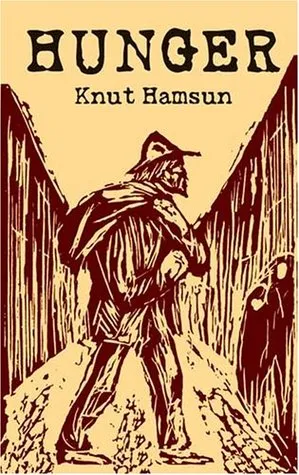
How much pride can get in the way of the starving artist’s daily bread. An ascetic young man’s life. Were it not for the brutal Realism of the descriptions we get of his hunger symptoms his life would read like some section out of The Lives of the Saints. But he is dedicated to nothing. He holds onto nothing. He is empty, purged of anything that could make him individual, but also anything that could bring the lofty ideas that he feels owed. Instead of sitting in beautiful contemplation of the mystery of the universe brought about by the emptying of his mind, he sits in shame, vomiting bile into the street, cursing his idiot’s skull that has no grand ideas with which to sate itself.
But somehow in his own hunger Hamsun found the enlightening idea to just seek freedom. He writes about his own purely material struggles with hunger. He has no plot. He has no aesthetic system. He has no overarching tractatus on philosophical consciousness. He just has the strange gnarled thoughts that well up in the mind of a man losing his hair from malnutrition. Fortunately for him though, the ascetic’s path to holy starvation is one that results in enough inwardness to make him free. And that’s what this novel is largely about: pure unadulterated freedom. Not being shackled by bourgeois social mores. Not being shackled by cliched platitudes of greeting and making up one’s own words when appropriate. Not even being shackled by time itself. The narrator shows us a world examined through a psychological lens and time filtered through the dilating hunger of a man going completely insane. A chiaroscuro effect of hunger and satiety contrasting within it like a Correggio painting’s light and dark.