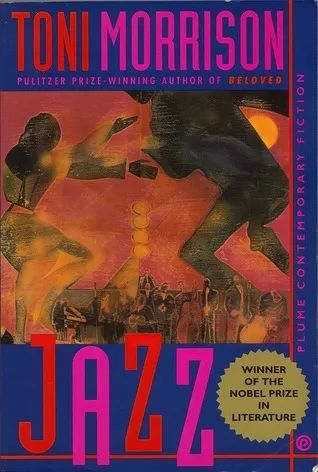
this is her fourth work that ive read (the others being the bluest eye, beloved and a mercy) and i consider it to be her best novel so far. while morrison has always experimented with structure as a way to enhance the meaning of her novels, i still wasnt prepared for how ambitious this novel would be in terms of its form and structure--specifically how the form sort of IS where its meaning lies, rather than merely enhancing it.
i think the concept of trying to embody the improvisational nature of jazz music is really cool, and i love how each chapter picks up one where the last one left off while still taking it in a completely new direction, whether it be focusing on a new character or jumping back and forth in time. you also see the jazz motif in the prose as well, as several passages have a really interesting rhythm to them and take on internal rhyming patterns, reading more like prose poetry if anything. the metaphor of jazz music and the theme of improvisation extend beyond just the novel's structure but into its themes as well. because many of the characters are so divorced from their pasts and history (or because their past is just too traumatic to even acknowledge and internalize), their identity is fractured, and they feel the need to "make themselves" up throughout their lives; joe trace specifically embodies this idea the most, imo. this idea sort of comes around in a really life-affirming way in the novel's last chapter; while the narrator tries to predict the story's events and read jazz's characters to the best of their ability, theyre ultimately unsuccessful, as there will always be surprises. life is a generally improvisational and unpredictable thing. we aren't always doomed to repeat the past—there is always the potential for self-actualization and pursuing the things you truly want to do, regardless of the input of others. the beauty of creating something new is an indulgence that morrison ultimately passes down to the reader in the novel's end:
my new favorite morrison

Mar 29, 2026