Nov 12, 2024 9:59 PM
I'm an idealist, a frequent house-party thrower, and a willingly naive romantic. I began this book on a beach during the warmest week of summer. I was fully submerged in dramatics of the socialites of the French Riviera and the blossoming affair between Dick Diver, the certain captain of this crew of socialites, and Rosemary, the young, beautiful, actress who has just met them. I felt warmly towards it all; I also willingly engage with a social circle of drunk, messy partiers and yearn for a paternalistic age-gap relationship. As a reader, I was willing to be Rosemary: to love and admire Dick but also love and aspire to Nicole, his strikingly beautiful and seemingly stoic wife. As a person, I am also often willing to be Rosemary. Halfway through reading this novel, a handsome man almost double my age swept me away on his vintage motorcycle for the remainder of the summer until I came to terms with the fact that he was too preoccupied for me.
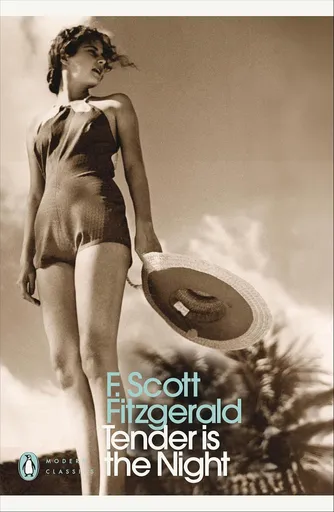
The shift into Book 2 should have been obvious but was nonetheless hard to grapple with. For the rest of the novel, Fitzgerald lifts the veil off of each character who, in Rosemary's eyes, were glamorous and aspirational. I was especially interested in Nicole. The treatment of her isn't unnecessarily cruel, but Fitzgerald and Dick Diver don't always have empathy for her. This casts a reflective light on both the romance between Fitzgerald and his lady Zelda and, as another reviewer here said, the gender roles of the era.
Beyond the Diver's marriage, each character and all interactions between them are crafted with impressive nuance, which makes for a fascinating and tragic read. Before this novel, I only had The Great Gatsby and Hemingway's anecdote of the hypochondriac Fitzgerald in A Moveable Feast to judge Fitzgerald on. Of course, I also knew about Zelda. I wonder if anyone has any thoughts in reconciling/psychoanalysing Fitzgerald as a paranoid neurotic as described by Hemingway versus Fitzgerald as a poignant observer as demonstrated in his writing ofTender is the Night. There is perhaps an underlying anxiety in his pessimism, his seeming faithlessness in people. Fitzgerald has been to one too many bad parties.
0 Comments