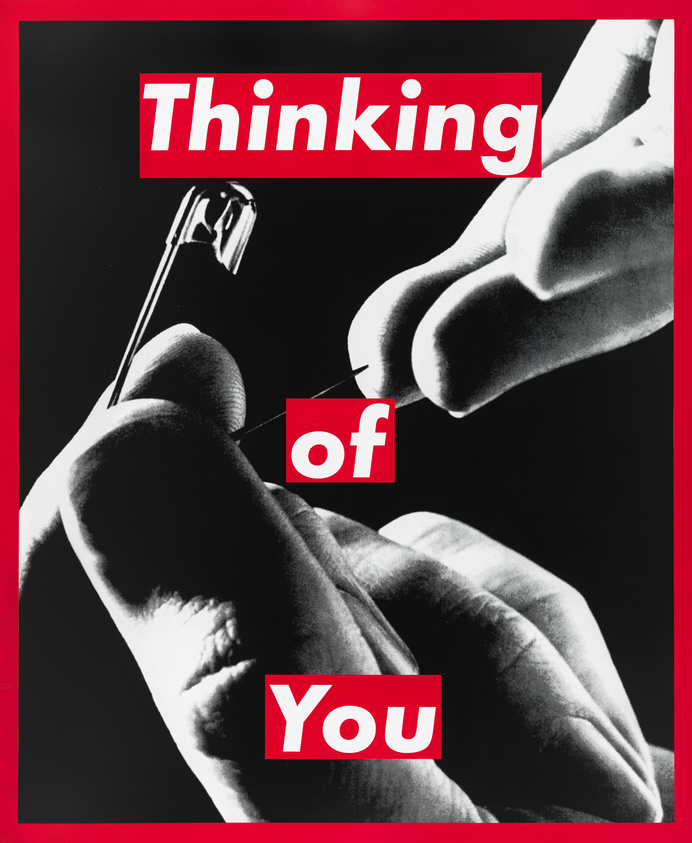
Jul 7, 2025 9:05 PM
Pain is a cipher. It contains the key to understanding any society. Every critique of society must therefore provide a hermeneutics of pain.
In our sleep, pain which cannot forget falls drop by drop upon the heart until, in our own despair, against our will, comes wisdom through the awful grace of God.
Aeschylus, Agamemnon, l. 176
The idea of pain being a cipher seemed like ascribing too wide a scope to such a narrow phenomenon. Pain is pain, not much else. However, Han very effectively demonstrates pain's prodigious scope (succinctly, too—huge props to the writers & philosophers who can convey their thought in such pithy prose). A culture's relationship to pain betrays its values, and the palliative society's relationship to pain displays both a self-centered obsession with comfort over freedom and a stubborn disavowal of the Other.
Pain is not merely a cipher, but the truth; "everything that is true is painful." This aphorism is quite common in daily life: "It pains me to say it," "the truth hurts," "bite the bullet," etc. Where we find pain we often find truth, because its confrontation be painful. The truth comes as a shock, it's a parallax shift to . A palliative society is one which views pain as an inconvenience, a speedbump which disrupts the flow of things, and it therefore seeks a way of living which eludes all pain. What is life without pain?
Our increasing expectations regarding the power of medicine, coupled with the meaninglessness of pain, make even minor pain seem unbearable. And we lack networks of meaning, narration, and higher authorities and purposes that could capture our pain and make it bearable. Once the pea is taken away, the mattress will begin to chafe. What is painful, after all, is the persisting meaninglessness of life itself.

Anesthesia protects against pain, but therefore precludes the shock of reality. Where do we find the shock of reality but in art? The best sort of art isn't merely an aesthetic experience, but one that confronts you with a new idea. A new idea shouldn't be consumable like a can of Pringles; it should feel like a restructuring of the pathways, like the disclosure of a facet obscured before that moment of confrontation. “One of the greatest pains to human nature is the pain of a new idea" (Walter Bagehot, "The Age of Discussion").
Han argues that pain requires a narrative to make it meaningful, but "meaningless pain is only possible within a bare life empty of meaning—within a life that no longer narrates." In an anesthetic state, pain has no means of articulation, it's just a meaningless suffering to be avoided. If a piece of art is so confusing that one would prefer to simply not think about it, then it no longer belongs in a society seeking comfort. The abstruse artwork has no home in the society without meaning because it's not worth the hassle of thinking about it. In what Han dubs the "hell of the same," the "language of pain, a poetics of pain, is impossible," as it "only permits a prose of pleasure, a writing in the sun." The society without pain prefers the digestible, but "the culture of the likeable and the agreeable lacks any opportunities for catharsis." Truth is not a multivitamin gummy. Truth and art "must be able to alienate, irritate, disturb, and, yes, even to be painful."
Similarly, if a social or political issue proves too nettlesome, then the palliative society would rather not deal with it at all. It's easier to let the homeless congregate beneath the highways where I don't have to think about them. It's easier to ignore where my food comes from because then I'm culpable for something and I just really don't have the time to be culpable right now. This isn't to make the hackneyed and boring "Gotcha!" about how all of us should feel bad our phones are the product of labor rights abuses & neocolonialism, and that actually we're all hypocrites, blah blah blah. In fact, anyone who makes this argument ironically precludes any attempt to acknowledge or address these problems by rendering the entire ordeal a moot point. What I mean to say is that a lack of desire to meaningfully protest these problems is the symptom of a palliative society, and therefore one concerned more with its own comfort than its freedom.


We don't encounter the Other more often than when we do in digital media. Digital media's making available of the Other ironically distances us from the "otherness of the other," making them "consumable." While maybe an overcooked observation, it is nonetheless true that our digital media simply make us less sensitive to the suffering of the Other. When a beheaded child is bookended by McDoubles, the shock of that visual is diminished, to say the least. Irony's a generational hallmark for Millennials and Zoomers, and it's in no small part because of the irony built into the digital medium. Aggregate sites like X: The Everything App, Facebook, and Instagram are irony instantiated. It renders the Other a consumable piece of content, and where the "sensibility for the other presupposes an 'exposure' that 'offers itself even in suffering,'" digital media eliminates this "primordial pain" and "reifies the other into an object." The Other is literally and figuratively "screened" off. All that remains is a "diffuse fear for oneself."

The nakedness of the soul results in fear for others. It is this fear for others that teaches me who I am.
Han posits this distance was exacerbated especially by the pandemic. The pre-existing distance of digital media and the increasingly atomized social dynamics were only augmented by stay-at-home orders. Sites of social exchange became online venues in which we participated from home. There was no shared office. There were no "third places." Gig economy "jobs" skyrocketed because they only required an individual to deliver to another individual; all "equipment" for the "job" was one's own personal property (i.e., a car or bike).
When the Other was temporarily perceived as a threat—a potential carrier of the virus—it laid the foundation for truly individualized ways of being, or what Han calls (invoking Foucault) "hygienic dispositif." In other words: "The neoliberal dispositif of happiness distracts us from the actually existing form of domination by forcing us into psychological introspection," and "ensures that all are preoccupied with their own psyches rather than interested in critically questioning their social conditions." The primary concern for one's own safety & comfort did not evaporate alongside the fog of COVID, and its sticking about has become the symptom of a palliative society. What's more, despite the constant refrain of appreciation for essential workers at the time, very few received any sort of material reimbursement for their service. Gig workers, grocery store employees, home health aids, and public transit operators received a lot of lip service, but next to no actual benefits. "Just put the fries in the bag" mentality is a conscious disavowal of the Other, because "thinking of you" is a prick in my finger and I really need to tend to my own needs, thank you.
“Nothing begins, and nothing ends, / That is not paid with moan; / For we are born in other’s pain, / And perish in our own"
Francis Thompson, "Daisy"