In college I was rather enamored with the pre-Socratics and the history of the sense of words. I loved Bruce Lincoln’s treatment of muthos and logos, Heidegger’s treatment of aletheia as unconcealment, and Pierre Hadot’s The Veil of Isis: An Essay on the History of the Idea of Nature. I was, however, always a little frustrated that Hadot started his history of the Greek term for nature, phusis, with Heraclitus. I was pleased to find a thorough treatment of the origins of phusis here in Bronze Age Pervert’s Ph.D. dissertation titled “The Problem of Tyranny and Philosophy in the Thought of Plato and Nietzsche.”
I read about half of it two years ago before it was published and put it down, telling myself I should probably get around to rereading Plato’s before reading the third section. I didn’t get around to that until about last week, and in the interim the dissertation has been published as , a title no less accurate even if more incendiary and cringe.
More reviews
Gorgias
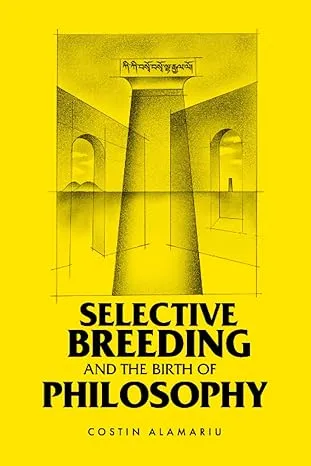
Selective Breeding and the Birth of Philosophy
It’s hard to sum up the the books arguments better than the author, so perhaps it is best to quote the thesis verbatim:
“The aristocratic regime, and aristocratic morality is the origin of the idea of nature; that, at the point at which a historical aristocracy starts to decline, its defenders, in abstracting and radicalizing the case for aristocracy in the face of its critics, come upon the teaching of nature and the standard of nature in politics. It is precisely this teaching of nature, so corrosive of all convention and all morality, that is politically explosive, and that explains the deep connection between philosophy - the criminal study of nature outside the city and outside the myths and pieties of the regime - and tyranny - the criminal and feral regime of rule outside and above all law and convention.”
What follows is an intellectual history that is a series of rebellions against conventions. Primitive, tribal societies are ruled by their own cultural conventions, tied to tradition and one's ancestors. For these conventions the Greek word nomos, meaning law, convention, or rule is utilized. Nomos is the standard behavior for one’s tribe and any attempts at behavior outside of it is blasphemous and treasonous. Transgression leads to punishment: quite possibly ostracization or death. How then does society move beyond this total rule of nomos? Using James Frazier’s explanation, one step is possibly a sacral king.
A witch doctor or priest king can sometimes rise to the top, but this really only extends the nomos. Complex societies such as Sumer, Egypt, and Persia can still form under this. Alamariu describes these as “oriental despotisms” but also stresses the sacral rule of the leader. They are different from tyranny and philosophy because both tyranny and philosophy lack this sacral aspect, and as he will later argue, emerge outside of and in rejection to nomos. The sacral kingship in a sense only expands nomos.
For Alamariu, society’s key to breaking out of this initial state of totalitarian nomos is a conflict between tribes that leads to a victor, with the victor creating an aristocracy that rules over and exploits the defeated. Generally (and particularly in the case of the Greeks) this is done by a pastoralist society defeating and exploiting a sedentary agrarian society. Some biodeterminsitic rationales are given for the pastoralists’ tendency to be the victor. First, the pastoralists have a mobility in manpower and property. Second, the diet of milk, meat, and cheese leads to a taller, more robust class of warriors. Historical comparisons of steppe societies interacting with settled civilizations are given. An analysis of the agrarian Hutu compared to pastoral, land-owning Tutsi societies is martialed as support for this argument. The ruling pastoralist military class then rules over and exploits the settled agrarian society, creating an aristocratic and serf classes.
This aristocracy is the ground in which the idea of nature springs forth into society otherwise wholly ruled by convention. It’s crucially in animal husbandry that the idea of nature, something beyond the rule of convention, is noticed and incubated. In the conquest of and rule over another tribe the idea of nature is instantiated. And it is in the application of selective breeding through marriage alliances and progeny that it is maintained.
To support this, Alamariu discusses the earliest mention of the word phusis, scant mentions in Homeric texts, and shows how they are inextricably tied to both nature and aristocracy. This is a trend that is continued further in the later Pindar. The second part of the dissertation is a thorough treatment of phusis in Pindar’s odes. The choice of Pindar here is important because his poems were commissioned by Aristocracy and consequently appeal to how aristocrats saw themselves. Phusis is mentioned with a high frequency in the odes, particularly with reference to the body and heredity.
The third part of the dissertation involves an unconventional reading of Plato’s Gorgias that interprets Callicles’ arguments rather than Socrates’ as the genuine opinions of Plato. The dialogue is ostensibly on rhetoric, but also involves discussions on nomos and phusis, might versus right, and tyranny. Alamariu examines Socrates’ arguments, and deems them weak in favor of Callicles. I don’t think this alone would be sufficient to make his case, but Alamariu also frames Socrates’ Gorgias comments at odds with comments made by Socrates in the Phaedrus, Menexenus, and it’s this comparison that I find most convincing.
It’s only touched on tangentially in this book, but there is an eschatalogical myth of the soul at the end of Gorgias where it is described how some souls in Hades are sent back but bad ones are interred forever. I think the ideas in the book opens up an interesting read of this as well. Socrates tells Callicles that he believes it is a very beautiful logos, but that Callicles will likely discern it as a commanding or prescriptive muthos. I think Plato retains a Homeric understanding of the words muthos and logos, with muthos being a sort of powerful speech-action made by those who have the force and power to back up their words and logos being a seductive reasoning done by effeminate. Even here in the Gorgias, logos is associated with beauty and muthos is a commanding dictum. Socrates tells Callicles it is a myth. An exoteric read would take this to mean that Plato, via Socrates, is saying this eschatalogical account of the soul isn’t simply a myth, but a literally true account. An esoteric read, on the other hand, could be that it is ironically reversed. The myth is an authoritative muthos in that it is given to the masses but also a beautiful logos (a beautiful seductive speech that an aristocratic class may use to help keep their intellectual liberty).
Alamariu argues that there is an exoteric and esoteric meaning for Plato. These meanings aren’t always at odds, but sometimes are.
“These philosophers furthermore, themselves in their external discipline of sobriety, temperance, justice, piety, may also be at odds with what actually motivates them: the philosophical erotic hunger for knowledge, lust for forbidden knowledge, for frankly criminal considerations; but this doesn’t make their exoteric stance any less real, let alone “metaphorical.” It is a double teaching that recognizes what is necessary in political life may be entirely different from what is necessary for the philosopher’s function. Dealing with this difference with respect to the circumstances of one’s own time is the purpose of the esoteric-exoteric distinction, and arguably the purpose of political philosophy in the first place.”
For Alamariu, Nietzsche shares this exoteric-esoteric trait as well. The Platonic project was a failure in Nietzsche’s eyes because it was too successful at taming and denaturing European man and culture. Over the centuries, Christianity and the exoteric reading of Platonism was ascendant and concealed man’s more brutal, vitalistic nature. By Nietzsche’s time, philosophy was something requiring education, the crowning achievement of culture, and something gatekept by academics. He sought to strike it down to clear a ground for it to be less institutional, more of a way of life, and more of an “aristocratic radicalism.”
There are parts that left me wanting more. I wish there was more of a treatment of pre-Socratic philosophers. Alamariu asserts philosophy was the “study of things in the heavens and under the earth” but became increasingly political in order to defend itself. I understand the pre-Socratics to be almost a de-sacralization of the natural world which meshes nicely with this statement. Heraclitus is mentioned a few times, and his dictum “nature loves to hide” is in the book, but unattributed to Heraclitus. Perhaps it isn’t warranted and it’s obvious to the original audience of this 300+ page book, but I’d be willing to suffer a more direct and thorough examination of the pre-Socratics as an intellectual bridge between Pindar and Plato.
The claims I’m skeptical of aren’t Alamariu’s claims outright, but are indicative of my own lack of familiarity with his sources. For instance, the claim that the concept of nature itself can only arise after sacral kingship comes from Strauss. I do wonder if this understanding of the relationship between nature, tyranny, and philosophy can be applied elsewhere. Can this rubric also be applied to the Chinese and their encounters with pastoralists to their north? I think it’s fruitful ground, and Alamariu has a very intriguing footnote that posits a steppe warband origin for Tibetan monasticism.
While the concern of the book is mostly historical and descriptive, given the author’s online presence endorsing vitalism, bodybuilding, and racism it’s hard to not see it also as his prescription. Even the author forgoing further academic pursuits could be seen as living in accord with Callicles’ statements: “when I see philosophy in a young lad I approve of it; I consider it suitable [...] But when I see an elderly man still going on with philosophy and not getting rid of it, that is the gentleman, Socrates, whom I think in need of a whipping (485c-d).
As stated in his preface to the book, very little has changed to the dissertation itself. A new introduction is the only salient change. And the new introduction touches on many of these geographical areas, discussing class and marriage laws throughout world history. He further argues for the importance of the ideas now, stating that ignoring these questions “is not going to be an option in the next few years given the very rapid progress of genetic research.”
I do wonder at the applicability of this to the modern age where a higher percentage of the population can have creative, philosophic pursuits due to the advancement and mechanization of labor. Does this expand what is acceptable to say or think in society or does it make it more difficult? Plato calls writing a drug for memory in the Phaedrus. Are pervasive LLMs coming to serve a similar function for thinking? If so to what extent is this a new nomos from which our natures, and philosophy itself, must hide? After all, phusis kruptesthai philei.
Regardless, I think the book clearly elucidates the thinking of a controversial pundit and is worth reading for anyone interested in clearly understanding his philosophical underpinnings or for anyone simply interested in the history of ideas.
It's hard to determine how accurate these sorts of linguistic analyses are without being fluent in the language. To me it seems very strange that the idea of nature could only come about when an aristocracy starts to decline. Would it not come about with the prehistoric tribes that lived in nature all the time? I'd have to read the book to see, I guess. It seems to me that if you could sort of argue any concept that is in Homer, Pindar, and Plato is tied to aristocracy, because literature itself for the longest time was necessarily tied to the higher classes, and because the subject matter of the Iliad and Odyssey is royalty and Gorgias is about rhetoric in politics (if I remember right). I'm also usually skeptical of flattening characterizations of philosophy as "the criminal study of nature outside the city and outside the myths and pieties of the regime." There's more to it than it simply being not-mythology. I'm not particularly interested in BAP and other nouveau Nietzscheans; why wouldn't I just read Nietzsche? He appears faddish. I like the cover design of this book though.
Its something I'm skeptical of as well. Without reading the sources he's drawing it from, my tentative understanding is that the primitive man has no concept outside his tribal zeitgeist, which is a sort of animistic view of everything. Anything that is outside the control of man (as in natural phenomenon) has some sort of animistic or divine cause rather than inert qualities innate to the object. BAP asserts what prevents thinking otherwise in primitive society is the threat of death or ostracization. But even if we accept that as true, I still don't get why the idea of nature couldn't come about in a complex, stratified society with a sacral kingship.
Why wouldn't you read Nietzsche instead? Good point. Most of this is centered on Nietzsche, albeit with a lot of extra details and extrapolations. It draws from Nietzsche's Geneaology of Morals heavily, but is also better cited than it.






It's hard to determine how accurate these sorts of linguistic analyses are without being fluent in the language. To me it seems very strange that the idea of nature could only come about when an aristocracy starts to decline. Would it not come about with the prehistoric tribes that lived in nature all the time? I'd have to read the book to see, I guess. It seems to me that if you could sort of argue any concept that is in Homer, Pindar, and Plato is tied to aristocracy, because literature itself for the longest time was necessarily tied to the higher classes, and because the subject matter of the Iliad and Odyssey is royalty and Gorgias is about rhetoric in politics (if I remember right). I'm also usually skeptical of flattening characterizations of philosophy as "the criminal study of nature outside the city and outside the myths and pieties of the regime." There's more to it than it simply being not-mythology. I'm not particularly interested in BAP and other nouveau Nietzscheans; why wouldn't I just read Nietzsche? He appears faddish. I like the cover design of this book though.
Its something I'm skeptical of as well. Without reading the sources he's drawing it from, my tentative understanding is that the primitive man has no concept outside his tribal zeitgeist, which is a sort of animistic view of everything. Anything that is outside the control of man (as in natural phenomenon) has some sort of animistic or divine cause rather than inert qualities innate to the object. BAP asserts what prevents thinking otherwise in primitive society is the threat of death or ostracization. But even if we accept that as true, I still don't get why the idea of nature couldn't come about in a complex, stratified society with a sacral kingship. Why wouldn't you read Nietzsche instead? Good point. Most of this is centered on Nietzsche, albeit with a lot of extra details and extrapolations. It draws from Nietzsche's Geneaology of Morals heavily, but is also better cited than it.