
Dec 13, 2025 4:23 PM
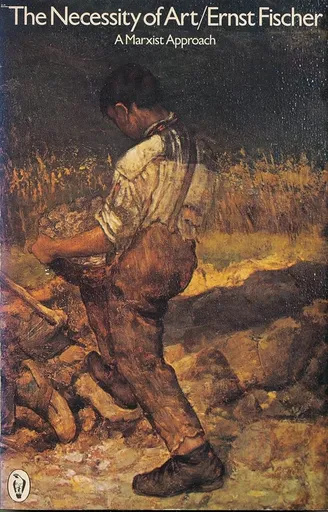
What you see is what you get: this is a 1959 book outlining a Marxist theory of art-making, and there are things to like and dislike about everything this entails, and sometimes they're the same things. For instance, the entire history of art is narrated/analyzed in 100 pages that ends with Kafka and begins with a brisk application of Fischer's theory of human nature to the origins of humanity. There's no world where they let anybody write something like this in 2025, but frankly, I sometimes prefer the big, ambitious, flawed-all-over theories over the modest, cautious, footnoted ones. I think the basic idea about art proposed here--that it's a way for people to access the wider social existence that, as individuals in a class society, they're never truly a part of--has more mileage than the "eternal verities of love, fear, etc." view of art, at least.
But there are certainly reasons to be dissatisfied with Fischer's approach. I can think of two, which are related: 1) it doesn't do justice to the intricate texture of art, and 2) it struggles to define art beyond representation.
I felt the first point strongly when, at one point, Fischer writes that the standard for judging any work of art is "its social content and its quality." But "quality" gets short shift here, such that nothing in this book seems to provide a foothold for making sense of why, for instance, Kafka is a superior writer than a regular-degular realist writing about the same "social content."
As for the second point, the timing of the book's publication in 1959 seems crucial: the trajectory of art in the sixties (more in the visual arts than in fiction) is full of examples that pull away from "representation," and critics like Susan Sontag made a strong case for the serious value of such works, arguing that art doesn't have to be about representing reality so much as subtilizing our perception, which can be done through deliberately non-representational effects.
I don't think you have to part ways with the Marxist perspective to achieve these insights. For instance, the way detail bristles in the writing of Fredric Jameson, like his description of a De Kooning: "In De Kooning, line transforms itself, it splays out, fanning into distinct yet parallel ridges and streams of paint, refracting the original substance into strands that have different densities, some mountainous and bristling, others trickling down the canvas in tears that no longer seem the marks and traces of maladresse."
But I've started to feel recently that people are too quick to put down whatever the mainstream or orthodox perspective in whatever field they're working in. Elaborating the "orthodox" Western Marxist perspective on art is a valuable task in itself, and it's only a stingy, intellectual ungenerous worldview that would praise Sontag and Jameson but not Fischer, the critiquers and qualifiers but not the one who developed the theory they're critiquing and qualifying. In any case, leaving that sensibility at the door is the cost you pay in embracing what I called the big, ambitious, flawed-all-over theories.