
“Some knowledge of yourself is the only reward life offers.”
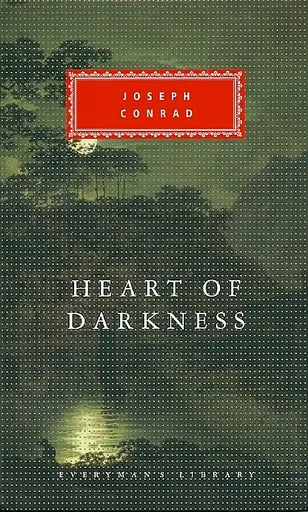
I can’t remember anymore if Conrad said that or if he had Marlowe say it. Half of my book was Conrad’s collected prefaces with critique essays. The other half was the sepulchral Heart of Darkness.
At one pole of the ethical architecture that Conrad constructed we have the bourgeois lies of modern “civilized” life. We have a state of perpetual static tension suspended between the butcher and the policeman. Safety and all the horror that comes along with it. At the other end we have isolation. All illusion of civility and safety stripped away and the raw flesh laid bare. We have eyes staring directly into the sun, unguarded by the ideology of Progress and the safe slow grey goo of expanding Capital. Which is the lesser of the two evils? Do they overlap in a way that’s impossible to escape? Maybe knowing these evils is enough. If we can look directly into the maw of Hell and decide for ourselves that our actions are our own and we have free will against the machinery we’ve built then we’ll be able to disrupt it or redirect it or something to absolve ourselves of the nightmare we’ve sleepwalked into.
Conrad and his avatar Marlowe trace a needle’s path suspended between the dueling nightmares that erupt with a scream as the 20th century is born into the horrifying world of European colonialism and the scars it will leave more than a hundred years later. He’s guided by little more than a childish desire to explore the world. To put lines on blank swaths of the man. The spirit of seamanship. And it’s with a mariner’s calculated wit and exactitude that he defines the cartography of the evils that we’ve brought to the most beautiful dark corners of the earth. How fortunate we are to have a few misguided tradesmen with the skill to report on how they were used.
Today his analysis of the stretching claws of the flabby white devil is as pertinent as ever. Only now the pallor of ivory has exploded through the prism of rare earth. The Belgian flags have grown tattered and Leopoldville has become Kinshasa, but Africa’s liver continues to regrow so that we can peck it out afresh with the dawn of a new market trend. A confused panoply of internal and external immune responses have done little to stave off the necrosis that Conrad’s International Society for the Suppression of Savage Customs and Eldorado Exploring Expedition introduced to the body and mind of the continent.
So then that’s it? Just a horrific window into the evils that man has wrought? How can we fight off this violence and savagery that lives within us and we’ve unleashed in the angry fluorescent glow of the Enlightenment? Is there no choice between becoming a cog in machinery whose designs you know to be enshrouding their malevolent truth and devolution into a pagan fetish depiction of evil?
The key to maintaining our sanity for Conrad comes in the framing of his story and the years that he’s allowed Marlowe to accrue before its telling. Marlowe sits on the deck of the Nellie in a lotus posture and the narrator never misses a chance to compare him to a Buddha. As he weaves his cautionary tale there is one word that he conjures and proselytizes. Restraint.
To Marlowe, Kurtz is a creature that has torn off the skin of its humanity by voiding itself of all restraint. Faced with the illusions of Goodwill and Progress Kurtz sees them for the same lies that Marlowe does. His reaction is a warning to Marlowe but it’s also horrifying in its relatability. In many ways it seems more noble to not try to hide the truth of the designs that Belgium and Europe at large has for the Congo. Kurtz’s most horrific truth is his addendum to his pamphlet on civilizing the Congo: “kill all the brutes!”
It shocks with the same voltage that it did in 1899. The involvement right to the precipice of insanity is necessary to wake us up to the evils that we propagate sometimes. We need the shrieked death knell of a man observing “the horror! sometimes to be able to pull back the reins and describe the strange dream we’ve concocted.
For Marlowe that manic dig to the center of the self, the bottom of hell, the end of the earth is the artist’s role and duty. How many were unlucky enough to get lost along the way after him and end up rusted and broken down on the banks of our hypertechical river?