
Feb 20, 2025 4:08 PM
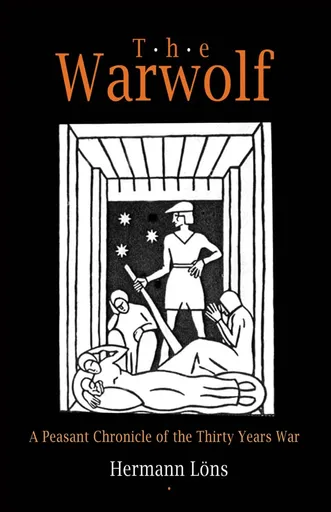
This novel had a promising premise but falls flat on its face halfway through. The story is an account of a peasant village in the 30 years war and its leadership by a freeholder named Harm Wulf. After a series of injustices, the local the villagers decide to take defense into their own hands. In the first half of the novel there seems to be some hints that the villagers are moving atavistically towards pagan roots. They revive an old symbol, the wolfsangel, children start singing nursery rhymes mentioning Wotan, and their militia places an emphasis on only taking unmarried men. It's a structure with clear parallels to the Proto-European Mannerbund, whereby young men with a totemic attachment to wolves would go on raids. Even the first chapter hints at something like this with a lengthy discussion the areas pre-Christian history. Little ever comes of these points though other than some simple foreshadowing of the villager's eventual behavior.
As the war progresses the villagers get more aggressive against trespassers and wayward soldiers. Local lords reward their efforts with moratoriums on taxes, and the peasants coffers overflow from robbed goods. The town takes in a preacher and uses the funds from looting builds a church. This construction of a church is a curious for two reasons. First, the peasants seem to have little conception or care as to whether this church is protestant or Catholic. Perhaps their ignorance is the point. Second, the cross they make to display in it is two wolfangels intersecting, which should be noted by the reader as a swastika. Again, we get some of the pagan symbolism without Lons ever doing anything with it. For all the Christian posturing of the peasants, nothing is ever done with it thematically either.
Harm Wulf by the end of the novel is old, gray, and thrice a widower. Heโs eulogized as a violent but righteous man because the violence was directed towards those who would otherwise injure the community, much like Samson or Judas Maccabee.
It's no wonder the third Reich republished it as propaganda for people on their homefront. The novel clearly puts forward volkisch virtues of self reliance, blood and soil, and defense of one's home, but it rings hollow. It's almost like the heart and values of the peasantry is something to be hidden, with the ideological symbols pointing anywhere but home. In a way, the values lauded by the book parallel the village itself: a home on bleak moors protected and hidden by forests and mires of symbols that point elsewhere.