
Jul 26, 2025 11:46 PM
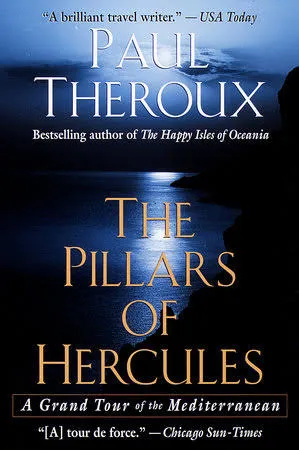
I like Theroux's travel writing because he's more interested in people than in landscapes and monuments. Travel and our experience of the world are mediated through people and their stories, yet so many travel writers seem averse to the kind of real-life chat roulette that can only be had by travelers or barflies. If Theroux is a misanthropist — which I think he is, and usually in an entertaining way — then it's surely a consequence of his having spoken to his fellow man all over the planet and found him, on the whole, a bit of a pain in the ass. This seems to me a defensible attitude, much more so than that of the Baedeker-style traveler (Chatwin for example) who prides himself on an open mind but seldom looks up from his notepad. He's a "traveler as an agent of provocation" as he says in his somewhat self-aggrandizing way.
Theroux chose the perfect moment for his lap of the Med. It's 1994, after the Maastricht treaty but before the introduction of the Euro; before smartphones and the Internet made travel easier and solo travel less lonely (and reduced the opportunities to strike up a conversation); the former Yugoslavia is mid-conflagration; Cyprus is still divided; Albania is in the throes of post-Communist anarchy; cheap flights haven't quite supplanted the far more conversation-provoking trains and ferries as the main way for people to get around. More than half the countries he visits are experiencing some form of war, anarchy or dictatorship; Spain and Greece have only relatively recently emerged from the latter state. The more interesting chapters, as you'd expect, are set in these states — Theroux doesn't find much worth saying about the French Riviera. But his writing isn't reliant on chaos or privation, as he demonstrates with an eloquent book-within-the-book, his account of a luxury cruise to Istanbul.
By this point in his career he's well aware of his reputation for egotism and curmudgeonliness, and plays up to it from time to time, like when seeing his books on sale in Barcelona gives the city "an air of sympathy and erudition and [...] made me want to stay a while." But the truth is he's always curious, and whether it's his personal notes on Dalí or his analysis of Spanish pornography or his relish in the demonyms Lesbian, Damascene, Tangerine, he's trying to get at the essence of the people and places he encounters. But it's always the dialogues I look forward to, like the exchange with some young Syrian men in Aleppo (then under the dictatorial rule of Bashar's dad), two of whom tell him they're gay:
"But didn't you say you were married?"
"Yes. I just found out I am a homosexual one month ago, after five years of married life."
"Isn't that a little inconvenient?" I asked.
"Only for my wife," Akkad said.