Jul 27, 2025 4:49 PM
Few books are abstruse as this. Attila perhaps has this reputation in the original Spanish, and translating anything - no matter how dutifully - is a hermeneutic process that results in inevitable distortions. This is compounded by some weird factors from the translator. In her introduction, Katie Whittemore talks about her difficulty with this process, resorting to consulting ChatGPT and her psychic medium. The English reader goes into this wondering to what degree the text's unintelligibility is a failure on part of the author, translator, or one's own understanding. Obversely, to what degree is any glimmer of understanding a projection of the reader onto the text? What hallucinations of AI (or psychic forces from beyond the grave) are projecting shapes onto an otherwise incoherent text? Needless to say, the challenges of interpreting a text here are dialed up to eleven, and at some point you just have to plumb the text yourself and read it.
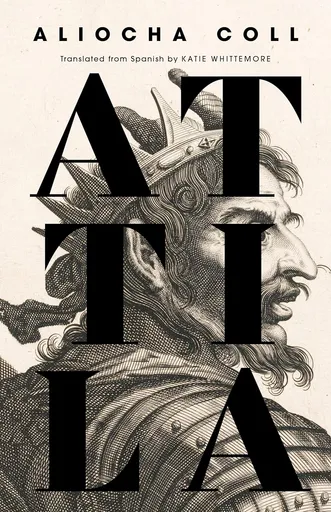
The first two and a half chapters are surrealist logorrhea regarding a fictional play and novel both titled "Laocoön". It isn't until the second chapter that the reader gets a few footholds to discern anything. The novel is set in a fictionalized 5th century. Attila the Hun's sons are hostages held across the Roman empire, and one of these sons, Quixote, is set to marry the emperor's daughter, Ipsibidimidiata. Attila, however, intends to recall Quixote and other hostages and retreat back to the steppe where he will create a new society with all that they have learned from settled civilization. He does not want to repeat the mistake they made with the Chinese, settling among them and being dragged down by their decadence.
It's at this point we may draw some thematic connection to the aforementioned mythic Laocoön, who warned his fellow Trojans against bringing the Horse in the walls. Attila's sons can be seen as Trojan horses to Rome, or perhaps the ideals of civilization can be seen as Trojan horses to steppe society, and Attila (like Laocoön) is warning against them.
Quixote, doesn't wish to go along with this. He and Ipsibidimidiata leave Rome and journey to Vandalic Carthage. It's mentioned somewhere in the book that "every flight is an origin", which led me to think this journey may be a sort of reverse recapitulation of the Aeneid. They would flee Rome, to Carthage, and then head to Troy (further cementing the Laocoön connection).
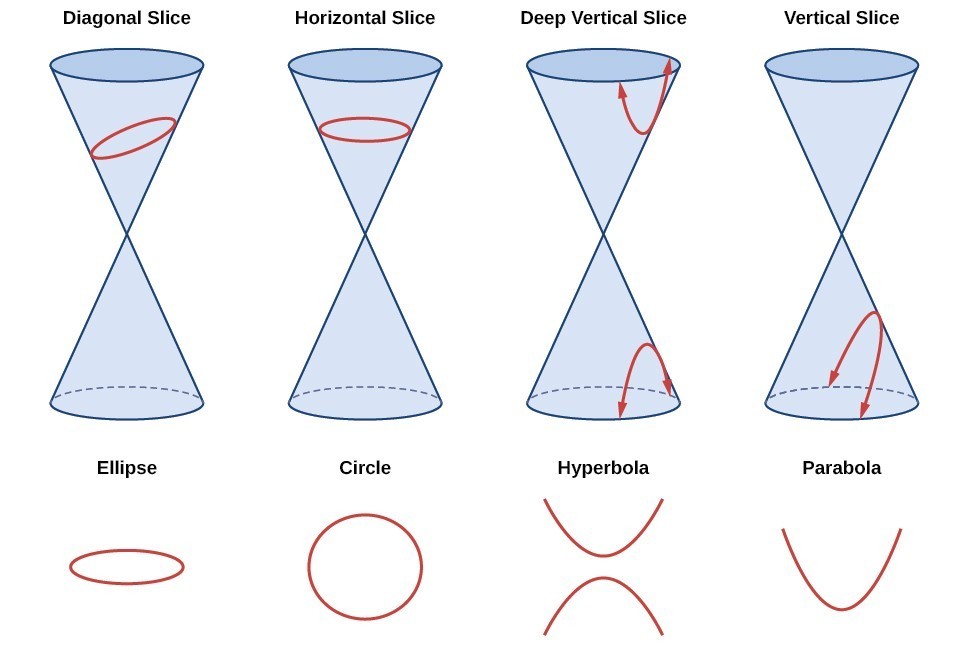
Like Dido and Aeneas, Quixote and Ipsibidimidiata go into a cave. At this point, there is a splitting of timelines or Quixote's consciousness. He is now Quixote and Hydatilla (Son of Attila). There's some interesting symbolism to go along with this. The cave's stalactites and stalactites are two conical shapes pointed toward one another, representing fields of possibilities in two opposing directions out from a single point, and yet they're both necessary for one another. Earlier in the novel it is noted that Quixote cant distinguish between "and" and "is" (In Latin,"et" and "est" are much more similar). It's a confusion that paralels Quixote and Hydatilla. Coll uses the word "hyperbolic", or some variation of it frequently throughout the text. This choice is significant since a hyperbola is the intersection of a plane across two cones pointed away from one another.

Regardless of the ultimate nature of this splitting, it is nevertheless split in two opposing directions: one direction loyal to Attila and another for Quixote's own desires. Throughout the rest of the narrative, a number of other characters, previously introduced in the play at the beginning, reenter the plot. They seem to be ghosts, angels, or specters, and maybe represent psychic drives or mythic archetypes in conflict with one another.
Absalom - the rebellious son
Antigone - the dutiful daughter
Solomon - the loyal son
Laocoon - the father
Melantho - ??
(And others)
From what I can tell, the reverse parallels with the Aeneid seem to stop at this cave. Latter parts of the narrative end up with Quixote in China. Quixote's flight from Attila's plans is still a flight to a spiritual origin. The Garden of Eden has been traditionally placed in the east. This is why old maps have East as the top, and why we say we "orient" ourselves when we get an understanding of where we are. Cementing this association, the text explicitly likens Quixote to a cherub, the type of angel assigned by God to guard the Garden of Eden after Adam and Eve were cast out.
Symbolically, there's a connection with the snakes that I can't quite make sense of. In myth, snakes were sent to destroy Laocoön and his sons. The serpent plays a crucial part in the downfall of man in the Garden. What's the connection in Attila? They're both associated with an origin, and the narrative move towards this origin, but think there's more here I need to tease out. I feel like I only grasped a fifth of what's going on in the book, but what little I have glommed onto leads me to believe that what I don't understand after one read may be clearer after subsequent ones. It was a frustrating read at times due to the cryptic nature and obscure diction. Purple prose would be an understatement; it's more like hyperporphyric prosody.
Worth it, however, for those who like to be thrown into confusion and enjoy the effort of trying to make sense of things.
5 Comments
4 months ago
Hello, did you read the companion volume released in English translation shortly after this, with the same title? In my opinion, it was the better novel.
4 months ago
No, I haven't read Serena's novel yet. I wanted to approach Coll's novel relatively blind. I thought that since Serena's novel is about Coll, it may have hindered that approach. Perhaps I should read Serena's before rereading Coll's. Do you think Serena's novel stands on it's own as a work? And to what degree does it help clarify Coll's work?
4 months ago
I took this approach as well and I'm not sure whether it was the right one. I think if I could go back I would have done it in reverse and started with Serena. Yes, it absolutely stands on its own - it captures the sort of eccentricity that inexorably leads to a work like Coll's in the real world very, very well. It's an amazing character study, and eminently believable, even though much of the details are fictionalized. As far as clarity goes, I don't really think there's any to be found by reading Serena.
5 months ago
Actually makes want to read it, although I am not convinced of the significance of the choice of "hyperbolic".
4 months ago
if hyperbolic is specifically significant, I would wager the significance isn't in the geometry as much as the original word root of something 'thrown over/overthrown/thrown above', tying both into the 'overthrow' of illusions or misapprehensions (the cave has obvious interpretations) and an overthrow of Atilla if not literally then in ideals.