
Apr 24, 2025 4:54 PM
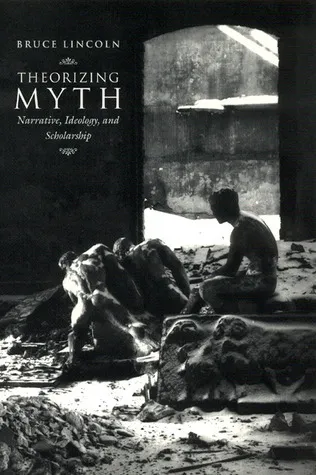
Theorizing Myth is a history of the idea of myth structured as a series of essays on the interplay of myth, narration, overt power and subversive rhetoric. In all cases, Lincoln argues, myth is a type of ideology in narrative form, but the connotations are different throughout the attested 2700 year history of the word.
Part 1 deals with the ancient senses of the word, with Chapter 1 tracing the etymology of "myth" from the Greek muthos and its earliest documented use in Homer and Hesiod. Rather than having the connotation of a fable, it instead denotes a type of speech act said by the powerful who have the means to impart their will upon the world. Logos, in contrast, is a type of speech almost exclusively used by women or the physically weak.
Chapter 2 deals with the history of mythos from Pindar through the pre-Socratics, and into Plato. Throughout these centuries, as Greek science and philosophy increasingly erode at poetic, religiously inspired explanations of the world, mythos gains the connotation of a tale or fable. Plato, however, makes use of the term as an instructive narrative that while not necessarily true, can orient people toward truth. By the Hellenistic era, mythos has taken on its more modern denotation. Though Lincoln doesn't take the argument this far, one can feel like the meanings of the words switch places, with Logos usurping the powerful, divine, omnipotent mantle of mythos by the 1st Century AD, and sealing it with the Gospel of John: "In the beginning was the Logos, and the Logos was with God, and the Logos was God."
Part 2 picks up the history of the idea of Myth at the Renaissance. It's a jarring jump, and while understandable given the connotation of myth changed little in the intervening eras, skipping over so much ground feels like a criminal caesura. For instance, Aristotle's Poetics and Julian the Apostate's "To the Cynic Heracleios" mention some form of the word mythos more than three times as frequently as the Iliad or Odyssey.
This post-renaissance history of the idea of myth shows it being increasingly tied to the idea of a people or Volk. A brief outline is as follows:
Johan Gottfried Herder posited that mankind at its root is not divisible into races or civilization into hierarchy but different cultures and physiognomies developed in reaction to new environments as mankind spread out. During this spread myth develops as a culture defines itself in opposition to other cultures. The Englishman William Jones posited an Asian origin European cultures. Germans were particularly drawn to these two ideas and merged them to see themselves as having a glorious past. Grimm, Feuerbach, Wagner, Nietzsche, Muller, and others honed the idea of a Volk further into a German identity that increasingly viewed Jews as other. Anthropologically, rather than merely religiously.
The next three chapters deal with three figures whose works, while perhaps the best of these scholars, still had an otherizing stance that came to be embodied by Nazi thought: William Jones, Nietzsche, and Dumezil. Jones, while not Eurocentric quite literally placed Persia as the origin of humanity and Persian as the Adamic language. Lincoln argues that Nietzsche's blond beast was not merely a lion, as others like Kaufman claim, but something that definitely had a racial component. Third, Dumezil reoriented an understanding of the German God Tyr to be a legal God, in line with his anti-Nazi but pro-Italian Fascist politics.
Part 3 involves accounts of Plato's Phaedrus, Plutarch's account of the Sibyl, Gautrek's saga, and Pandits under the aforementioned William Jones. Lincoln argues each reoriented myths to serve their political needs.
Lincoln concludes the collection with a commentary on whether scholarship is a logos or a muthos, musing that "if myth is ideology in narrative form, then scholarship is myth with footnotes." Overall it's a deft analysis and comparative approach to myths and the history of myths and how political forces shape and reorient them.