
Nov 11, 2024 11:37 PM
Read this on @Spudm0de's recommendation.
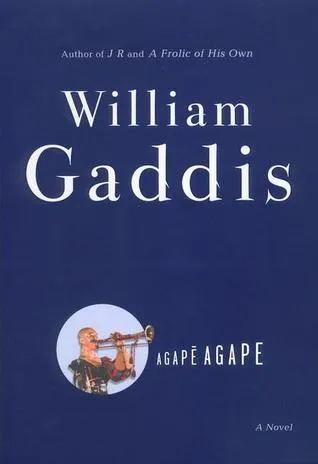
Agapé Agape: agapé is Greek for “brotherly love” - Love Agape
Think his review is enough of a sell on it, but I wanted to share my scattered thoughts... Basically stealing the exact same quote but I really like the addition of the next sentence:
...because that's what it's about, that's what my work is about, the collapse of everything, of meaning, of language, of values, of art, disorder and dislocation wherever you look, entropy drowning everything in sight, entertainment and technology and every four year old with a computer, everybody his own artist where the whole thing came from, the binary system and the computer where technology came from in the first place, you see? I can't even go into it, you see that's what I have to go into before all my work is misunderstood and distorted and, and turned into a cartoon.
Gaddis tossed out a comprehensive novel about the player piano decades in the making and painstakingly researched in favor of a novella self-insert character ranting about the topic. It touches on a lot of these technologies relying on artists/humans to be created before taking off and abandoning them... The general public's willingness to seek entertainment and instant gratification and softness of popular accessible works rather than unrefined humanity.
While about the mechanization and dehumanization of art, also its direct ties to commercialization and reaching a wider audience. That the role of the artist has changed from the creator to the performer, trapped vying for the attention of the masses rather than someone to be cherished. The widespread nature of these technologies continues to dilute the space and again left the artist and humanity behind. A precursor to the full-blown content overload of the 21st century and the internet where finding meaningful art requires substantial effort in of itself. Add the current AI controversy of these models being trained on artist's work against their will to keep this trend of pushing the "soul" out from modern life, and it only continues to be relevant. This inward question of "is widespread accessibility of art actually a good thing?" Honky-tonk tunes that are popular on the player piano overshadowing classical masterpieces and a trend to cater to the general public rather than the aristocratic in the art world are leading to worse art. Collectivism and market motivations vs. individualism and meaning. While a fundamentally elitist take, it's hard not to see his point. He cites a variety of different works, but the passages fromin particular stuck out to me. There is this emphasized contrast between this novel receiving a Pulitzer posthumously and the author and its character's struggle within the novel to navigate a world that worships nothing but labor. Particularly it highlights the character, Burma Jones and a lot of Cajun AAVE over the top lines that could be shallowly interpreted as just a bit racist. With the nature of the novels publishing history, you wonder how much the original manuscript was tinkered and edited following Toole's death. The artist's lack of any control over their art now. The fear of your work being edited, published, commodified, adapted, morphed, stolen into something completely unrepresentative of your vision or beliefs. Even Agape Agape was published posthumously, with notes at the end mentioning edits.
The difficulty of staying true to your own identity in a world of editors and a shallow market...
To me towards the end of the novel it's a bit of a realization that the grip of reality will always stop art from being appreciated and a reminder people are always behind the structures that have led to this. "The hallucination of everything out there..." The naivety you had about your art or what you appreciate, and how embittered you become over time as you watch what is undeservingly popular. The difficulty of separating from the technological and societal binaries ascribed by modern life to find meaning and identity. Add on to that American individualism, everyone wants to be an artist now, and nobody wants to spend the time appreciating existing meaningful work.
Though the book does end on a higher note, recognizing that art has and will continue to bring out humanity and it allows you to bond with those from beyond your time. Whether it be music, art, etc. There will always be those continuing to pour their soul out and it's the readers' duty to find and relate to them. The book is a jumbled stapled together combination of influences and opinions firmly presenting to the reader what Gaddis finds to be important and that there will always be those that filter out the junk to truly love other humans.
Highly recommend reading the afterword by Joseph Tabbi as my copy did not have it. I'm mostly spewing... there's better analysis that goes much more in depth on this, but I was highlighting how it made me feel or what I took away off the cuff with a little digging around on the internet for further interpretation.
I found this site really great as well for additional background/ annotations while reading:
William Gaddis - Index - Gaddis Annotations