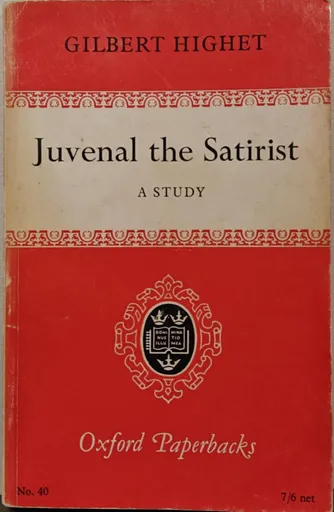

Highet's monograph is dated now. No-one today would entertain much of his (admittedly ingenious) reconstruction of Juvenal's life—and certainly not his argument that the poet really did suffer exile in Egypt. But this doesn't matter to me. I read around Juvenal to understand his poems and Highet has all the sympathies you want in a critic of poetry. Rather more than you could easily get these days, in fact... To give only the most sensitive example, Juvenal the Satirist is an interesting relic of the transitional period between the taboo against homosexuality and the general acceptance of it. Highet stands at the crossroads: he has no odium towards the gays but it's no effort for him at all to entertain the attitudes of Juvenal (vituperation), Seneca (censoriousness) and Martial (jeering) towards them. Juvenal shocks different ages for very different reasons; and so it's a pleasure to read a critic who doesn't cast him as a mere unthinking reactionary (homophobe racist misogynist etc etc) as so many authorities do nowadays.