
Jul 2, 2025 12:02 AM
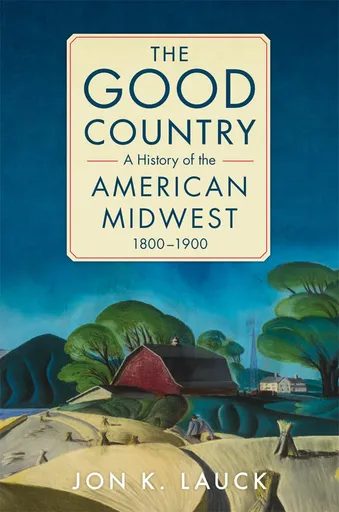
I'm long Midwest, and shamelessly so. I grew up in Ohio, and I still live here. So I'm a little biased. But I do think a re-invigoration of the Midwest is possible and that it can become a place people aren't yearning to flee as soon as they can. The history of the region, outlined in Jon K Lauck's The Good Country: A History of the American Midwest, 1800-1900, can serve as a guide for this re-invigoration.
That's not to say the aims for reviving the Midwest involve recreating the past. I'm not a fan of the sort of resentful or pitiful nostalgia that has fed so much discussion of the Midwest since 2016. I don't think it's feasible that every factory town that was prosperous in 1950 can be as prosperous, in the same way, again today. But I do think the region as a whole can be dynamic, inventive, and attractive again. This is especially the case if the expensive cities of the coasts continue to fail to solve their problems. New York and San Francisco can continue along just fine while only being a sustainable place to live for a tech/finance/consulting/media overlord class and a Doordash slave/homeless people underclass. This is an undesirable equilibrium, but it's not an unstable equilibrium!
The Midwest, on the other hand, has plenty of relatively cheap real estate, and even some economic and job growth! But "place to raise a family once you get priced out of the place you actually want to live" isn't an attractive model for the region. But before it developed its reputation as "square", repressive, and boring, Lauck writes, the region surpassed nearly everywhere else in the world in democratic character, religious freedom, and educational and economic opportunity. The Midwest, according to Lauck, was, for a time, the most genuinely democratic place on earth, especially in comparison to the slave holding South and the aristocratic East, let alone the monarchies of the Old World. It was in the Midwest that the Jeffersonian/Republican ideal was most nearly realized: a society of yeoman farmers and craftsmen who worked the land, educated themselves, and in participated in local government.
Lauck's history is not a narrative. Instead, the book is divided into five thematic chapters dealing with the establishment of democratic norms in the early 19th century, the growth of democratic culture, the formation of regional identity, progress and failures in race relations, and the moderate reforms passed in response to industrialization and urbanization. There is much to be admired in the information he provides, but the book's value is in its bold thesis: that the Midwest has not been given its due in American history, and that the history profession as a whole is too wont to criticize rather than find anything admirable about the past.
Lauck aims to rehabilitate Midwestern history, both by writing about it at all and by writing about without excessive condemnation. But he also aims to resuscitate the study of the Midwest not only to understand the past, but to guide the future, which is admirable:
A revival of civic engagement, more grounded forms of education, republican idealism, moral training for citizenship, a respect for the common culture of old, and a devotion to a balanced history that helps us see their collective value seem in order. The old Midwest could be a reservoir of idealism and hope if we knew its history.
1 Comments
5 months ago
Good review. I'm also a certified midwest enjoyer. One of the biggest issues I've seen is that every revival strategy proposed is a "silver bullet" solution – "If we just do this one thing, our region will be saved!" It usually takes the form of opening huge megacorporation facilities (which never actually open because a lack of infrastructure makes them unfeasible) or bringing in remote workers (who don't actually contribute enough to the local economy or community to balance the cost of the incentives). Everyone wants to have the next NYC, but if any tangible progress is going to be made, it has to focus on rebuilding the decentralized agrarian/service economy that allowed for small towns and main streets to spring up in the first place. Also, you might enjoy the work of Wendell Berry, particularly his Port William stories/novels.