
Apr 11, 2025 9:31 AM
The glorification of anticonformism is an old thing in the Western world. Born in the 1960s, it celebrates the loser, the iconoclast who is able to defy the social order. It had at least a function: to somewhat give some room to people who didn’t/couldn’t fit in. Nowadays, Inclusive is the word, and anticonformism appears as an affectation. And then, I remember Japan exists.
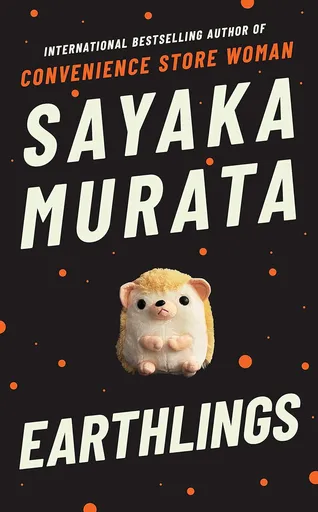
Two young cousins, mistreated by their families, take refuge in each other and create tales—they are both extra-terrestrial beings waiting to find their spaceship and leave for good. They “get married”. Their family separate them and they’re punished, guarded until they conform. Now an adult, she is able to pretend and hide her true self. She mimics humanity (the Factory), and tries to avoid becoming one of its tools (a useful womb).
She finds a husband on surinuke.com (it doesn’t seem to exist, but means “slip out” or “escape, either physically or mentally”): they share the same feeling of being ET, otherworldly, and marriage is a way to offer a credible picture to their families and acquaintances.
We both felt it. It wouldn’t be long before an envoy would arrive from the Factory. We were shirking our responsibilities as components and would soon be forced to return. And actually, I was longing for that envoy. We would be taken back to the Factory, where my husband would be put to work, and I would be calmly but coercively encouraged to have a baby. Everyone would lecture me on how wonderful it would be. I was ready for it. This time everyone would ensure I was perfectly brainwashed, and my body would become a Factory component.
Soon, they find the cousin—who joined humanity—and try to convince him to recover his alien nature in their childhood home, in the mountains.
This is a small book, following on Convenience Store Woman’s topics: the search for a way to escape the incredibly crazy social pressure in Japan, fake work, fake marriage, existential solitude and the necessity to pretend in order to exist. Earthlings goes further: the characters try and undo their brainwashing in a self-destructive (or, rather, humanity-destructing) manner.
It reaches a gory summit, and I'm guessing the satisfaction brought out of this paper revenge against society is holding the pen. If the reader doesn’t partake, the ending might feel a bit flat: three beings, cut-off from the world, in a remote house in the mountains, trying to undo what brought them there.
Though, I am reminded of The Last Psychiatrist:
BPD is not a description of behavior exactly, it is a description of an adaptive coping strategy. In other words, people persist with BPD because it works.
“Works” has a limited definition for borderline: prevention of abandonment. Narcissism protects the identity at the expense of everything else, Borderline will do whatever it takes to avoid abandonment, including giving up one’s identity. Abandonment isn’t loneliness or isolation, a person can run away to the woods for a year if it preserves the connection to the other person, even in a terrible way: “I’m hiding out because he’s out there looking for me to kill me.”
TLP often mentioned these two common profiles of our times: narcissist and BPD. Reading Murata, thinking of incels and hikikomoris, that feeling of being cut-off mixed with some sort of permanent fear of unrelatedness seem to be the great motivator of the characters. As if Murata had exaggerated the common childhood feeling of not belonging (Maybe they adopted me and my real parents are coming to get me?) and ran with it. Then, when you read a bit about her life, maybe it is not that exaggerated, since her words and her character’s are the same:
“In my early 20s, when I was at university, I had a number of heterosexual relationships, and at the time I thought: If I were to marry this person and have their child, my life would disappear. I would be their tool. There would be no time left to be me.”