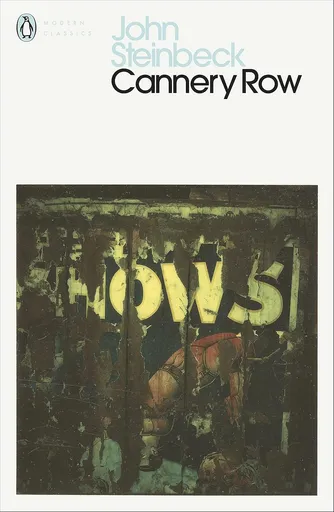

Very few books manage to be as expansive and as succinct as Cannery Row. The book is a panoply of beautiful and human vignettes and a loving portrait of Monterey, California and its prose is best in class; Steinbeck writes with a style that Hemingway wishes he had gotten a hold of. I'm filled with a deep jealousy whenever I read Steinbeck's prose, and in that way he's very similar to Nabokov for me.
There's a quiet fatalism at work throughout the novel, but Steinbeck never loses his characters in their circumstances, and the book never feels cramped by suffering or tragedy. In spite of the hardship and poverty of many of the characters, Cannery Row is a celebration of all that binds us to one another as human beings; all that is laudable and sublime in our hearts, the kindness and the sincerity and the love of one's fellow man, it all takes centre stage and makes of the novel an ode to earnestness. There's a wonderful rhythm at work as well for readers who can hear that sort of thing in literature: like clockwork Doc goes down to the shops for quarts of beer after work, and Mack rallies his troops with words that we've heard before but which never seem to lose their lustre. One can't help but feel the warm, California breeze when the novel's working its charm and by the end of it, I knew Cannery Row as well as one might know Mansfield Park or Hardy's Wessex. The novel is a real treat through and through and I can't recommend it highly enough.



Steinbeck is uniquely gifted in writing about terrible circumstances in a way that warms your heart. This is because he is a veritable humanist; he loves and has empathy for all his characters. He believes in them. Timshel! :)