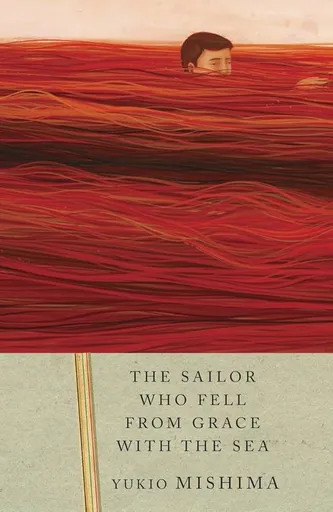


A sailor, Ryuji, gives a tour of the ship in which he serves to a widowed mother, Fusako, and her child, Noboru. During his errant years the sailor had thought of nothing but sea and adventure, but the arrival of Fusako changes him and now they have fallen in love. Abandoning the life of the sea he sinks himself into a domestic life with his new wife. Noboru, who once idolized the sailor, now grows to resent him; he and his friends orchestrate a plan to poison Ryuji.
The act of Noboru killing his step-father we should see as a sort of mercy-kill. Euthanasia: good death; this is what the ancients were talking about. The sailor was already dead, he died the moment he gave up his dream. There was this episode where Fusako gets brand-new "classy" clothes for the rough sailor: I see this scene as the culmination of Ryuji's domestication. It's like those stories you hear of Indians finding themselves stranded in civilization, in which they start to wear western clothing, symbolizing the defeat of their ancestral ways. Take this excerpt from Heart of Darkness:
And between whiles I had to look after the savage who was fireman. He was an improved specimen; he could fire up a vertical boiler. He was there below me, and, upon my word, to look at him was as edifying as seeing a dog in a parody of breeches and a feather hat, walking on his hind-legs. A few months of training had done for that really fine chap.
At first, the children (Noboru and his gang) had idolized the sailor, he was a paramount of virtue, he symbolized everything they wanted to be in the future. But he ruined all this when he fell at the feet of a woman. A Spanish bullfigther once said "I kill the bull because I respect him. Because I love him. Because I want to offer him a glorious death—a death that gives him the chance to fight alongside me, to show who he is, his character." I remember also this passage from Tacitus's Annals (or Suetonius?): as Nero is on the road he happens to run into a band of slaves being transported; one of these rushes to the feet of the emperor and begs for death. Nero answers him: And you think you're alive?
The novel is divided in two parts: Winter and Summer. In the second part Ryuji becomes a sort of Jane Austen character. The once great sailor comes back in winter from his trip and the moment he touches firm ground he becomes completely feminized: he brings a present to Noboru, trying to play the domestic role of a father; he asks Fusako to marry him during New Year's while they watch the sunset. During Summer the sailor had been idolized by the children, he was brave and strong; in Winter he's a shell of his former self, Fusako has defeated him, his existence becomes a comedy.
And in a way, there's something beautiful about the way the sailor dies. The "chief" of the gang (of which Noboru is only a member) orchestrates a meeting at a beautiful abandoned American watchtower. The sailor is here brought by Noboru under the guise of the children desiring to hear his sailing tales; Ryuji even wears his old sailing clothes! The chief poisons the beverages, and the ceremonial tea being brought, Ryuji drinks it, and while drinking it he thinks of the sea, and a nameless sorrow invades him; Noboru hands the cup to him with shaking hands. He was already dead, the children were just getting rid of the carcass.

