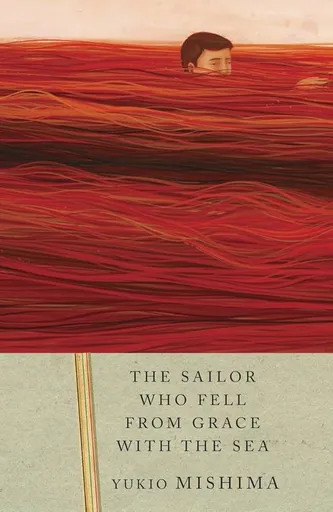

Mishima writes for the image, scenes sacrificed at the altar of images, of serenity, brutality, perversion, striking image after image that tell the story much like a montage, through abrupt juxtaposition and merciless sordid momentum. Sailor has all the odds and ends of a morality play, but what lesson did we learn? To always stay true to our principles? I don't think so. Ryuji does change, but the tragedy of his death is how close he was to discovering a happiness so far removed from the one he always sought, how much capacity for change he almost unlocked. Of course, the narrator, for all of the novel, is so firmly in Noboru's corner that you could be convinced of the righteousness of his fury if you don't stay vigilant. Noboru himself tries to stay true to his core (even when the few moments of birds-eye view show how facetious his insistence on his spiritual enlightenment is, a mask for emotions as basic as red-faced teenage rage) and ends up where? A murderer, with a home and a mother, re-broken. Free, but free of what? So is it a story about embracing change, the tragedy of remaining stationary? Well, I don't know about that either. If Noboru is right about one thing, it's that, for the sake of this relationship, Ryuji, too, is putting on a mask. He is somewhat phony, whether wearing the face of the amiable father figure or the charming romantic. It's all a circular contradiction, playing pretend for the sake of others playing pretend, and completely riveting. The work of a born novelist, a born playwright, and a born actor; a man born playing pretend. He could have called this one Confessions of a Mask, too.