Mar 14, 2025 7:08 PM
Historians will remember Ginzburg as the microhistory author that brought us such bangers as The Cheese and the Worms: The Cosmos of a Sixteenth-Century Miller. Readers of fantasy novels may recognize his work on the Benandanti as the inspiration for plot points of Guy Gavriel Kay's Tigana. Semioticians may recall him as having something published in a collection edited by Umberto Eco.
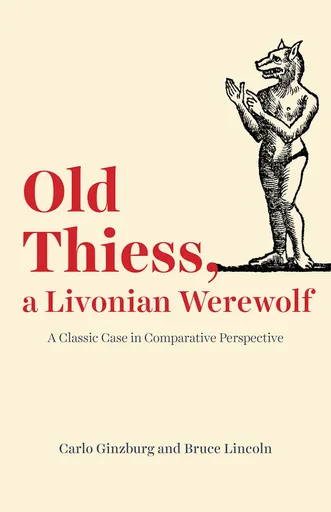
Bruce Lincoln, a scholar of religion, is perhaps less known. He has an article on the history and contrast of the terms muthos and logos in Archaic Greek thought that I find quite insightful. So when I learned these two historians had jointly published their scholarly discourse on Baltic werewolf beliefs, curiosity compelled me to buy the book.
The book offers an initial primary source: a court transcript for a man accused of lycanthropy, and his unabashed admission of guilt. This man, "Old Thiess" stated he would go to hell three times a year as a wolf to recover grain stolen from the village by sorcerers.
The second chapter is a translation of the German scholar Otto Hoeffler's argument that the behaviors Thiess is confessing represent a vestigial cultic practice that has ancient ties to the Indo-European koryos, Germanic Mannerbund, and the Greek cult of Demeter.
Chapter 3 is a collection of Carlo Ginzburg's work that attempts to tie the account of Thiess to the cultic practices of the Benandanti in northeast Italy. He interprets the confession as an ecstatic spiritual ritual.
There are strong similarities, to be sure, but Lincoln is unconvinced and argues that the connections are being cobbled together from sources too disparate. Any similarities to the Benandanti could be a result of similar phenomenon rising independently in reaction to similar material forces in each region. Lincoln posits another theory in Chapter 4, arguing that Thiess is actually stealing cattle and taxed grain out of the Germanic overlords' storerooms and his confession to being a werewolf is an attempt to levy critiques and accusations back at the local powers. He's essentially trolling them by saying, "Yes, I'm a werewolf and I steal the grain from Satan for good purposes", implying that their taxation and rule is evil.
The two scholars respond to one another through correspondence and then have a more direct dialogue that eventually ends in an amicable aporia.
I'm more inclined to Lincoln's interpretation on this. His critiques of Ginzburg are rather thorough, and his argument that Thiess is visiting a real, physical space is compelling. He does however, underplay what I think is a ritualistic, shamanic, cultic component. Other villagers had attested that they knew he was werewolf and Thiess stated he wasn't the only one doing this. There's clearly some folkloric substratum here and it's almost as if cultural memories of the pastoral, marauding Indo-European koryos is bubbling up reformed in their distant descendants' settled, agrarian milieu.
I previously reviewed a novel by Hermann Lons, Der Wahrwolf, about a fictionalization of a German village that depredated soldiers in the 30 Years War. In that novel the local overlords were spared these attacks when they granted reprieves on taxes to these villagers. Curiously, Lons' work was published in 1910 before all this scholarship.
3 Comments
9 months ago
Magic and the supernatural are such interesting topics in medieval/early modern history. The problems with teasing out the extent to which people believed in it literally is so fascinating. Going to pick this up. How is the writing? The topic seems interesting enough and the scholarship good enough for me to endure a drier read, but I might read it sooner if it is well-written and engaging.
9 months ago
I think the writing is excellent. Ginzburg's writings aren't as clear as Lincoln's prose, but that may be because some of his stuff is translated from Italian. For as conceptually heady as it is though, I wouldn't call it dry. The last third of the book is the transcript of a dialogue and that's really breezy. It is short though, less than 200 pages without the appendices.
9 months ago
The transcript of the trial is available at the publisher's website if you'd like to dip your feet in first! https://press.uchicago.edu/sites/thiess/old_thiess_transcript.pdf