

If there are two governing images throughout Mark Strand’s poetry, they are the wind and the moon (though the grass and the ocean are honorable mentions). The moon often gazes indifferently upon us, and the wind gusts over grass, between our legs and the trees. Each engenders the nocturnal, the reflection of one’s self and the moon in a pool. These bare environments evoke the nostalgia of Ghibli backgrounds, where you feel a yearning to return to a place you’ve never been. Strand himself seems to occupy the pastoral Prince Edward Island. Landscapes of sprawling tall grass, an expansive sky, and an artful pool of water nestled between green hills. “Black Maps” seems a paradigmatic Mark Strand poem, in this sense. One in which neither "the attendance of stones" nor "the applauding wind" will assure you of your arrival to some truth or established self. These black maps in which we seek meaning describe only their own emptiness, the "bleak, temperate / Necessity of [their] completion." You will not find your house on these maps; "Only you are there / Saying hello / To what you will be, / And the black grass / Is holding up the black stars."
A lot of the poems reside in these black maps, liminal spaces in which we have a vague grasp of ourselves, but the rest is nebulous, drifting. The wind and stones here are anthropomorphized almost ironically. Their attendance and applause, as if you find yourself the subject of a lecture with the indifferent world as audience, nothing to grant your belonging there.


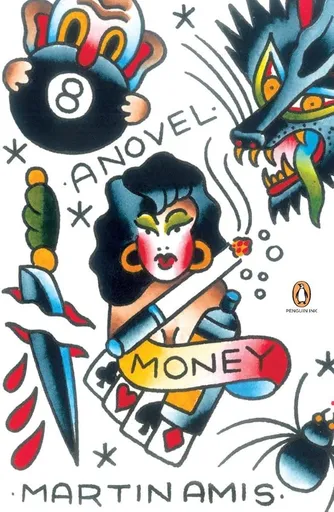
Thanks for the review. Strand seems very clearly in the Stevens tradition (see "Futility in Key West" for at least an easy connection to the "Idea of Order in Key West"), so obviously Poundians will continue to snarl their own misgivings as even from the start this kind of inward poetry of an invented world disturbed them. I admire where Strand catches you off guard with a frank complaint: in poor north "Nothing goes right" or in the dead "The dead are more dead each night". The gift for a childish obviousness where our learned idiom usually makes it intensely difficult to organically reach. The mid-career turn of the century Seidel does this well too. I don't mind the cover. They have a far side quality to them (e.g. "2002"). They share a kind of irreducible masculinity (Stephen Dobyns comes to mind too for some poems, rather 'far side' work himself), it's not violent but it's male, incurably, and not in a negative sense. You'd also never read Strand write something like Stevens' "I had as lief be embraced by the porter of the hotel/As to get no more from the moonlight/Than your moist hand." but instead you trade for a snappy conversationalism, quick, rude, jazzy little people (gods, death, etc) happily talking past one another. Lots of characters like Canon Aspirin. I also think poetry books deserve interesting, bizarre covers. Why not?