
Jul 31, 2024 11:47 PM
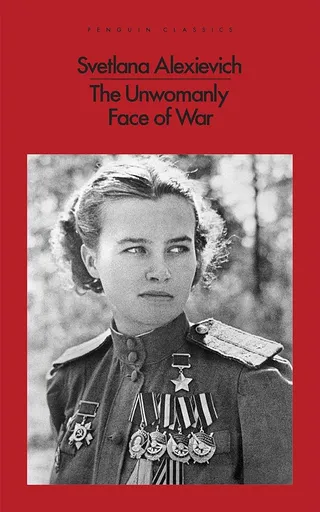
The Unwomanly Face of War is not a linear narrative, it is a selection of first-hand accounts by women in the Soviet Union during the German invasion in 1941, all gathered by the Soviet/Russian journalist Svetlana Aleksyvich.
You could read it as tragedy porn if you were a very dull person, but it's really a window into an entire world and era. I wrote a bunch of tedious background and framing but you could get that from anyone. Who fucking cares.
There are hundreds of stories and unforgettable scenes casually jotted down, just off the top of my head I can recall these, possibly imperfectly:
A female sniper now in her 70s is nervous about speaking to the journalist because she is afraid her real memories might contradict the official narrative of the war.
A teenage girl acting as a partisan leading the younger children of the village whose parents have all been killed takes some young german soldiers prisoner, ends up encircled, and executes the POWs one by one, secretly, so as not to upset the kids who have bonded with the german prisoners already.
A critical note from a soviet censor in the 1980s chastising the author for wanting to publish an account: "If people read this, no one would ever be willing to go to war!"
Partisans beat the mayor of a village and his son to death with steel rods for not resisting the germans
The germans burn entire villages alive, over and over
Groups of people who get to know each other over weeks and months are killed by the dozens in a few minutes or a few seconds
A kindly old soviet senior officer brings a hairdresser to his front line female radio operators before a major offensive so they can look and feel their best before going into battle
The feeling of being a cook in a field kitchen with an absurd amount of leftovers having made a dinner prepared before battle for the 100 men that were there for breakfast, only 7 come back alive for dinner.
A female partisan war hero going home to her village after years of fighting and winning several combat awards. Her reception is oddly cool, and after a few days her own mother packs her a bindle and tells her to leave the village forever. Why? Because she fought and slept alongside men and so everyone thinks she's a whore, her mother tells her she has brought shame on the family and is afraid no one will want to marry her younger sisters unless she leaves.
A young petite nurse carrying amputated legs, hundreds of them every day, the legs are too heavy for her to carry comfortably, she has to cradle the bleeding severed legs like they're a baby to haul them over to the trash. Soon she is covered in blood head to toe and wounded men recoil in fright at the sight of her.
Svetlana asking women to remember their stories and writing them down has made her everyone's enemy: in Russia, she is guilty of muddying the heroic myths. Outside of Russia, she is guilty of making it impossible to defend any part of the invading countries, any part of the invading armies, any part of the society and worldview that sanctioned and supported what was being advocated out in the open, and anyone who is willing to plow under the enormous and incredible history for short term gain. Dehumanization is the core political principle of the new era, and anyone who tells the truth about what it looks like will eventually be considered a traitor by all.
This is a gruesome and unflinching book, but it is filled with thousands and thousands of images, settings, stories, identities, emotions and events. And it happened, and it was remembered, and these memories are being attacked from all sides, are in danger of vanishing under the demands of political expedience and a nihilistic, instrumental attitude towards the past.
You can get a great deal from this book if your happiness does not depend on ignorance.
1 Comments
1 year ago
Nice review. I’ve only read one of hers, about the experience of the collapse of communism, but it was every bit as good as you make this sound. Alexievich is one of the most deserving recent Nobel winners I think, in the sense that her work is “important” as well as being great art.