




Delany’s later work is often dismissed as gay erotica, and to be fair what he’s writing is more often than not gratuitous and disgusting. With regards to the grotesque this novel is no exception, but looking past the onslaught of debauchery it does elevate itself to literature. It is much more high brow than his early sci-fi, even if it superficially far more debased. The way the themes, structure and symbolism all play off one another, the way it engages with philosophy and hermeneutics, and the prose (no homo) are all quite good. Trigger warning: everything (especially postmodern shenanigans.)
When, after what diuturnity, the susurrus of my breath alone for company, inky indigo touched the leafy edge of my stone window, then, over the next half hour, streaked the opening with cloud-striped teal, finally to overfill it with copper dawn, I was up, out my door, and into the temple courtyard.
This novel is double framed. On the outermost shell, a man searches in vain for a work of erotica that he saw once when he was younger, but the closest thing he can find is an academic website that summarizes and reviews it. The fictional novel reviewed by the website is also titled Phallos. This website quotes the original at length, but not in its entirety. Large portions are elided over and summarized by the website’s author, Randy. This innermost core of the framing, the urtext, constitutes the bulk of the narrative and oscillates from first person direct quotes of the original and Randy’s second person summations. Adding to this complexity is a series of lengthy footnotes to Randy’s summation by two commenters: Phyllis and Binky.
The names given by Delany to the website editor and commenters are no accident. Randy is colloquial for horniness, Phyllis is a slight homonym with phallus, and Binky … well, I really don’t want to explain what that might be alluding to. Each name expresses and informs their attitude toward the central, reviewed urtext.
The urtext is set during the second century Roman Empire and told by Neoptolemus who recounts his lifetime of gay cruising and his involvement with the Egyptian cult of a nameless god. This cult captures him, almost sacrifices him, and releases him when another member ransoms him. However, the priests also tell him the phallos of the nameless god's idol has been stolen. Neoptolemus believes inside this phallus is a scroll of hermetic texts and secrets for the cult. It’s a MacGuffin that quite literally symbolizes Derrida’s concept of phallogocentrism: the idea that societies have historically privileged the masculine aspect of things in the construction of meaning. Delany turns this symbolism on its head, however; Neoptolemus will come to learn that this phallus is fake, and that every time characters claim to have it they only possess a simulacrum of it. The real phallos is actually still in the bowels of the nameless god’s temple.
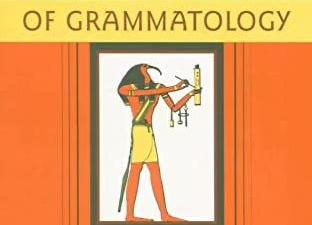
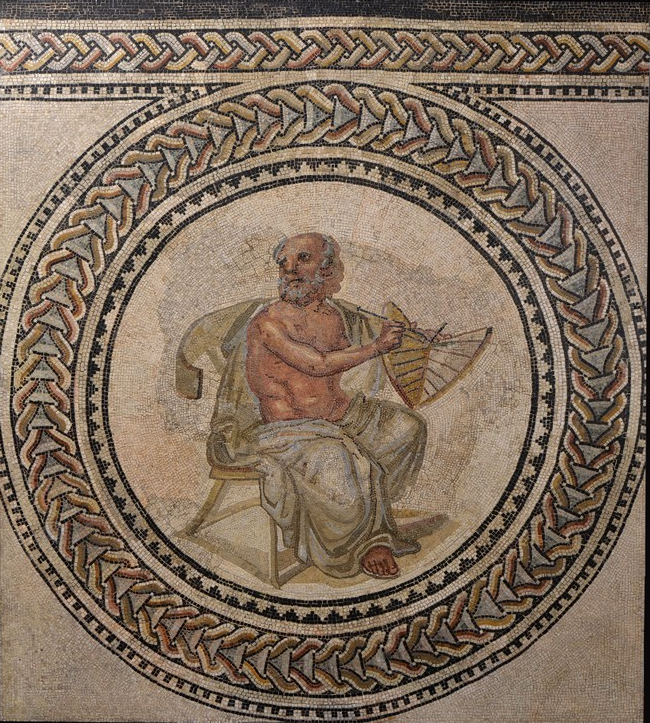
But Derrida is far from the only continental philosopher Delany is engaging. Early on in a very lengthy footnote, there is a discussion of one of the fragments of the preSocratic philosopher Anaximander and this fragment’s reception by Hegel through Heidegger. The structure of the novel and its subject matter has a lot in accord with the transmission of preSocratic fragments through the millennia. Like the preSocratic fragments, the urtext of Phallos, the innermost narrative of the novel, what has been passed down to us the reader is incomplete, known only through the direct quoting, commentary and analysis of others.
Heidegger’s stance towards these fragments is usually that their meaning is passed through history and corrupted by Plato and Aristotle. His analysis of the Anaximander fragment brackets aside all commentary between him and Anaximander and tries to make sense of the text itself. When reading that analysis one gets the feeling that Heidegger isn’t really getting at the truth of what Anaximander said, but rather injecting his own thought of Being and phenomenology into it. As with Plato and the urtext of the preSocratics, Randy also transmits and edits the urtext of Phallos, glossing over what he deems to be the boring parts and excising the parts he believes would get his website censored by the university. To what degree, like Heidegger, is Randy projecting his own urges and desires into the meaning of the original?
Phyllis and Binky also bring up questions regarding the provenance of the novel, asserting it may have only been written as a pastiche between the 19th and 20th centuries. To what extent is our reception of the urtext colored by our own modern notions? Words like gay and straight are used, but is this a legitimate understanding or a projection of modern sexual identities into an archaic past. Like Heidegger writing off and skipping over the history of philosophy in his treatment of Anaximander, to what degree is someone skipping over the mores of two millennia of Christian thought that otherwise color normative understandings of sexuality.
I think it’s curious that the footnote leaves out the analysis of Heidegger’s student Gadamer, whose hermeneutics and approach to the preSocratics is much different: we must take Plato and other later commenters at their word, because while what they passed down was edited by them, what they transmitted was likely accurate because they had access to a much greater library of texts now lost.
Other PreSocratics like Empedocles are alluded to as well. At a point in the narrative where Neoptolemus has just left the island of Delos, the birthplace of Apollo, and has recently come to a cave on Mt. Etna he has a vision:
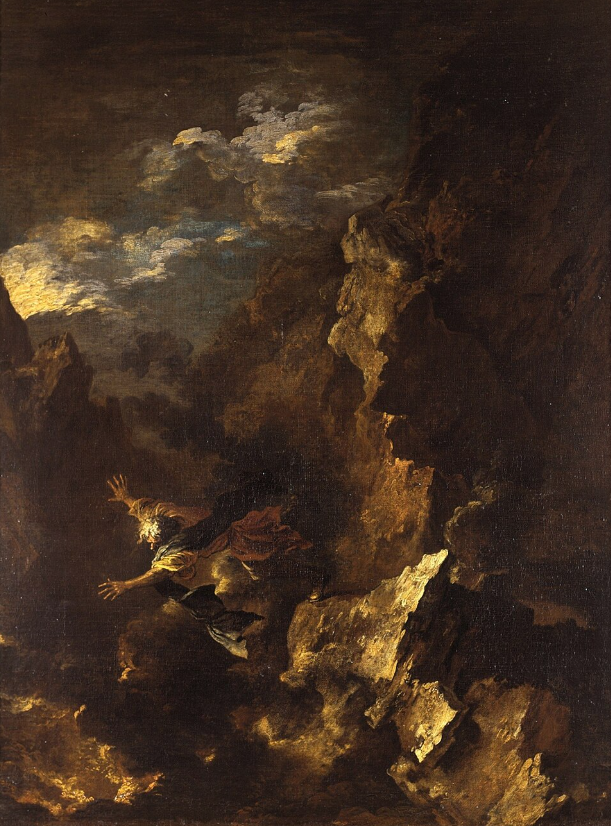
every ritual, every representation, every law, every sign, every symbol, every word - even to the Word itself worshiped by the Christian Gnostics - functions as a phallos, since each is a stand-in, a rehearsal, a model, a symbol for something not there. [...] As he forces his body upon [an idol’s giant bladed cock], further and further, driven by some appalling parody of lust, it cuts him into chunks and bloody gobbets. Even as the nameless god (in other dreams so monstrously tender) viciously ravages Neoptolum’s corpse, a horde of demons and dragons, male and female, continue the rape as a bevy of thundrous hallucinations - humans, gods, and demons - converge in a climactic Walpurgistnacht. The orgiastic celebration with hundreds of revelers is a monstrous parody of the marriage down the mountain, between a pig and a goat, both beasts sacred hermaphrodites. Together the celebrants take the nameless god itself, who presides over the revels and who, by now, has transformed entirely into its own phallos, carry it up the volcanic slope, and fling the god or its representation into Etna’s cone, while the god’s laughter bleats out like the cries of a clumsily slaughtered beast. Finally Neoptolomus, who seems to have transformed into one or the other of those sacrificial animals, passes out from a pain, within which certain throbs and pulses imitate a nameless merging and pleasure.
The movement from the realm of Apollo to an orgiastic revelry is not merely a reference to Dionysian visions. The contrast and explicit blending of opposites is also a reference to Empedocles, whose own philosophy was replete with references to grotesqueries and held that the ordering principle of the universe was the conflict between Love and Strife. Empedocles, like the sacrifice mentioned in the above text, threw himself into Etna.
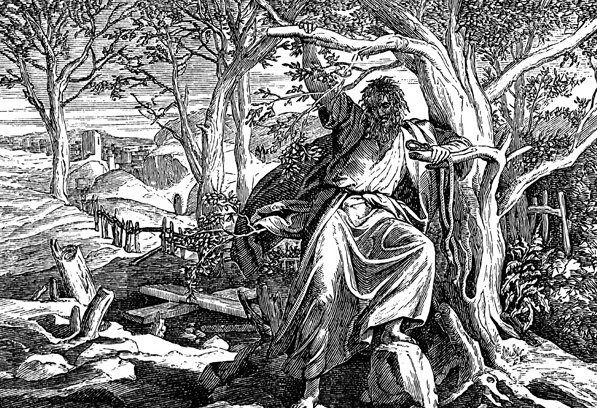
The ritualistic impalement of the vision is a practice of the priests of the nameless god, as we learn later in the text, and there is a tradition that one intended for sacrifice can be ransomed. This had previously happened to Neoptolomus and he in turn does so for another character, Nivek. The cost is 30 dinars. The sacrificial impalement and the price of redemption hints at a reversal of Judas’ price for selling out Jesus, who was then impaled. Rather than divinity being sold out by a man for 30 dinars, impaled, and sacrificed for mankind, in a sort of gay kenosis a man is threatened to be impaled by divinity but ransomed by another man with 30 dinars.
It’s all splendidly done, even if the phallic symbolism can get a little ham-fisted at times. I have little familiarity with psychoanalysis or queer theory, so there’s probably some beats I’m not picking up on. There’s also a couple of chapters of academic analysis in the edition I have, and I’ll probably read those as well and eventually put brief summaries in the comments below.