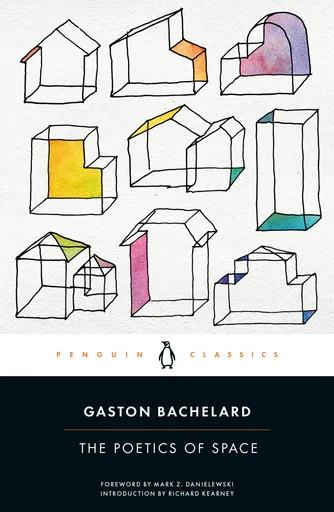

It takes a while to key into the wavelength of this work, whose ethos Bachelard counterposes to both psychology and science. The latter can only understand our relationship to space literally and non-metaphorically (a house is for shelter, x by y feet, etc), the former in terms of a deeper psychological meaning (the house is a womb, doors metaphors for boundary anxieties, etc). Bachelard instead focuses rather on what he calls a "phenemonology of the imagination": a patient excavation of the resonances various spaces—from the house to corners and drawers to the dialectic of "inside" and "outside"—have in our imagination.
What this amounts to, without being dismissive, is vibe analysis, or a science of vibes, for which it's not productive to be too doctrinaire or even too invested in the truth of the analysis. The best way to read a book like this is in a comfortable armchair with some tea, swimming slowly from one poetic image analyzed by Bachelard to another (there are a number, drawn mostly from French literature and poetics). Relax, and certain half-forgetten images from your past will come unbidden to your mind. A little corner of the playroom where you felt comfortable as a kid. An illustration of a cottage with yellow windows and a roof topped with blue snow buried somewhere in memory. A forest you used to walk through in grey morning light.