
Mar 15, 2025 9:58 PM
I had an English professor who once remarked that he had chosen to specialize in British literature because all American literature was about one thing: America. He did not mean, I think, that American literature is more parochial than European literature. Instead, he meant that American literature wrestles with what it means to be an American, the effects of the ideals and myths that define ordinary Americans' self-perception, and the glories and tragedies of Freedom.
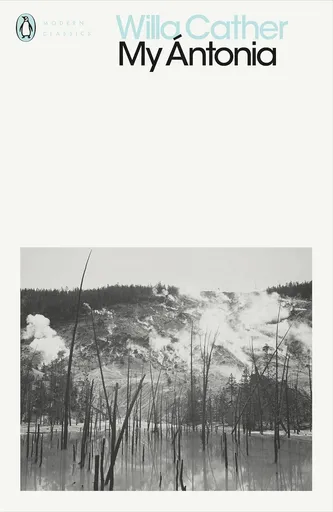
My Ántonia is about America, but a particular place in America and a particular time. The novel is structured as the recollections of Jim Burden, a New York City lawyer, who as an orphaned boy left his home in Virginia to live on his grandparents' farm in Nebraska. There he met the Shimerdas, recent immigrants from Bohemia. Jim befriends their eldest daughter, Ántonia, as his family helps hers acclimate to the new, unforgiving country.
My Ántonia is a powerful treatment of childhood, the passage of time, immigration, (androgynous?) women, and friendship, but just as important as these weighty "universal" themes are the Great Plains themselves. The lonesome prairie makes indelible marks on Jim and Ántonia. The novel contains many beautiful passages describing the effects of the Plains on one's spirit, such as when Jim first arrives in Nebraska:
If we never arrived anywhere, it did not matter. Between that earth and sky I felt erased, blotted out. I did not say my prayers that night: here, I felt, what would be would be.
The Plains which shape Ántonia and Jim bind them together, even as their lives drift apart. Maybe because I have been blessed by a not inordinately difficult life and cursed with a melancholy disposition, I have always thought that the saddest thing in the world is not the murders, suicides, and betrayals of tragedy but the slow recession of fond memories further and further into the past. Jim and Antonia go their separate ways, the former to college and a legal career, the latter remaining in Nebraska as a farmer and mother. When Jim revisits his childhood friend after twenty years, he still finds her full of "the fire of life." On meeting Ántonia again, he reminisces:
I had only to close my eyes to hear the rumbling of the wagons in the dark, and to be again overcome by that obliterating strangeness. The feelings of that night were so near that I could reach out and touch them with my hand. I had the sense of coming home to myself, and of having found out what a little circle man's experience is.
The epigraph, from Virgil, is "Optima dies...prima fugit": "The best days are first to flee." Well chosen!